Your Complete Spring AC Startup Guide for Denver Homeowners
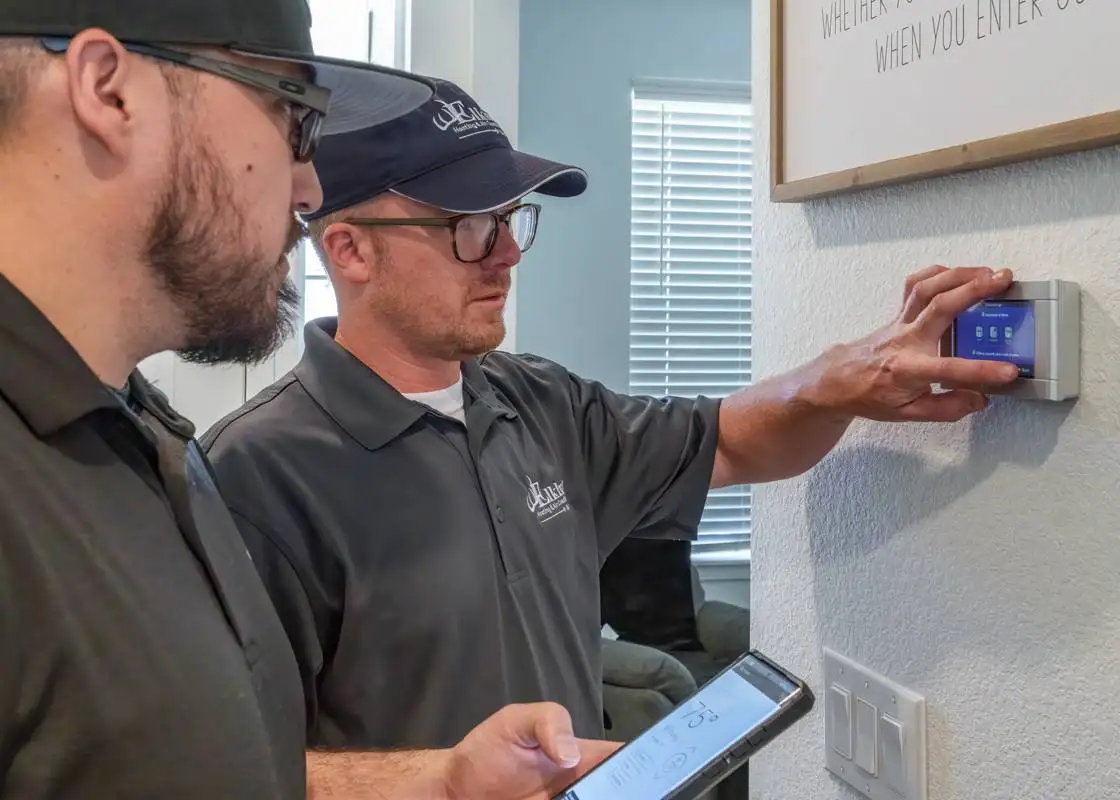
While some U.S. cities use their ACs constantly, this is not the case in Colorado. We often let our ACs sit idle for six or seven months in a row. Because of this extended dormancy, there’s a risk that the AC won’t work when you finally switch it on. Elkhorn Heating, Air Conditioning, Plumbing & Electrical can help you prevent unexpected complications through timely tune-ups and AC repairs.
By completing your spring AC maintenance checklist in Denver, you can be confident that your AC is ready for the hottest days of the summer. To see what your checklist entails, what to watch out for, and when you need a Comfort Specialist, read on.
When Denver Homeowners Typically Switch From Heat to Cooling
Thanks to our semi-arid climate, we have fairly unpredictable spring temperatures to deal with. In Denver, we can experience 80°F days in March and snow flurries in May. However, most homeowners start to think about switching on the AC in late April or May.
Deciding when to turn on an AC in spring in Colorado should be based on what’s comfortable for your family and how ready your AC is for warm weather. During the transition period between March and May, homeowners will likely need to use heating and cooling each day. By preparing your AC in advance, you can guarantee that your heating, ventilation, and air conditioning (HVAC) system is ready for everything.
To keep it cool this summer, first-time owners need to be especially proactive. In our newer subdivisions in Brighton, Aurora, and Commerce City, homeowners should inspect their builder-grade systems before hot weather arrives.
DIY Spring AC Startup Checklist: 7 Steps
To learn how to start an AC after winter, start by working through the following checklist. In addition to handling the following maintenance tasks, you should also schedule your AC maintenance appointment with one of our Comfort Specialists.
- Step 1: Check and replace the air filter. If you haven’t replaced your air filter since last fall, it’s time to do so. This is easily one of the most effective things you can do to boost your unit’s energy efficiency.
- Step 2: Inspect the outdoor condenser unit. Debris can block the airflow in your outdoor unit. To prevent this from happening, remove any leaves and debris within 2 to 3 feet of the unit. Then, trim any bushes or plants in the same space.
- Step 3: Check the condensate drain line. You can quickly check for a clogged drain line by pouring a cup of water down the line. Clogs can lead to indoor water damage, so it’s important to catch them early.
- Step 4: Switch the thermostat to cooling mode. Before you start up your unit for another year, you need to verify that it’s working. Test it by switching the AC to cooling mode. Then, set the temperature a few degrees lower than your room temperature. If your AC is working properly, you should hear the outdoor unit kick on right away.
- Step 5: Listen for unusual sounds. If you hear buzzing, clicking, grinding, or complete silence, it’s time to get your air conditioner checked out by a professional.
- Step 6: Run it for 15 minutes and check the airflow. As part of your spring AC maintenance checklist in Denver, you should run your AC for 15 minutes and check all of your home’s vents for airflow. If there is weak airflow coming from specific vents, your ductwork needs to be looked at.
- Step 7: Verify the breaker is switched on. Some homeowners shut their AC breaker off as part of their winterization process. If your AC won’t turn on, check your electrical panel before assuming that something is wrong with your unit.
Signs Your AC Needs a Comfort Specialist After Winter
If your AC is not working after winter in Colorado, you can troubleshoot by monitoring it for the following common signs and symptoms.
- Short Cycling: Short cycling is when a unit turns on and off more rapidly than it should. An AC that short cycles may have a faulty component or a dirty filter. Alternatively, this could occur if the AC is oversized. While you can troubleshoot by replacing a filter, faulty components and oversized systems must be addressed by a professional.
- The AC Blows Warm Air: Sometimes, an AC will turn on and only blow warm air. This problem is likely due to compressor issues, airflow restrictions, a refrigerant leak, or a thermostat problem. You can troubleshoot by making sure the AC is set to the appropriate temperature and cooling mode. If this doesn’t fix your problem, you’ll need to call in an expert.
- Pooling Water: If there is water pooling around the indoor unit, the condensate drain line is likely clogged. You can try flushing it with vinegar. Alternatively, our team also has professional tools that can remove stubborn clogs.
- The AC Won’t Turn On: This can occur if there is a failed capacitor, electrical connection, or contactor. These problems can only be diagnosed and repaired by a professional.
- Unusual Odors: While musty odors mean there is likely mold in your drain pan or ductwork, a burning odor stems from electrical components. In all of these circumstances, you should schedule repairs with a licensed technician.
What a Professional Spring AC Tune-Up Includes
Besides your routine maintenance tasks, you should also plan for your spring AC tune-up in Denver and Littleton. During our professional inspection, we will carry out the following tasks.
- We will check refrigerant levels and adjust them as needed.
- Our technicians will tighten and test your electrical connections.
- The evaporator and condenser coils will be cleaned.
- We’ll measure the airflow across your supply and return vents.
- Your thermostat will be calibrated. Then, we’ll double-check that it is programmed properly.
- Our technicians will flush the condensate drain line.
- We’ll perform final safety and performance checks before we leave.
At Elkhorn, we won’t just sell you on a service. Our team is committed to providing upfront pricing and honest advice. If an emergency strikes, our same-day services have you covered.
Common Spring AC Issues in the Denver Metro
When it comes to HVAC spring maintenance in the Denver metro area, there are a few local factors you must work against.
- Elevation: We’re about 5,280 feet in elevation, which means more intense UV degradation on your unit’s outdoor components. Prompt maintenance can help you catch this issue before the component fails.
- Dry Climate: Due to our dry climate, we often get more dust in our ductwork and air filters. In addition to changing air filters and vacuuming ducts, you can alleviate this problem with the help of an air purifier. Air purifiers are also important add-ons to have during wildfire season.
- Temperature Swings: Spring days can vary from 80°F during the day to 30°F at night. In response, your HVAC system has to shift between heating and cooling during the same 24-hour window.
- Hail Damage: During summer storms, hail can dent condenser fans and cause hidden damage to your outdoor unit.
- Aging Ductwork: Englewood, Littleton, and South Denver suburbs have homes that were built between the 1970s and 1990s. As a result, these properties often have aging ductwork that reduces AC performance.
Smart Thermostat Tips for the Heating-to-Cooling Transition
Whether you have ductless mini-splits, a heat pump, or an air conditioner, the right thermostat settings can help you stay comfortable without spending a significant amount on energy costs. During the spring transition, we recommend using auto mode so that your thermostat can automatically switch between heating and cooling. If your thermostat can’t do this, it’s time to consider a new installation.
For the best energy efficiency, consider your dead band. The dead band is the difference between your heating and cooling set points. Typically, 3°F to 5°F is a good gap for staying comfortable without causing the unit to short cycle. You should adjust this set point for the day and night so that your home is ready for Colorado’s drastic temperature swings.
FAQs
Is it too early to turn on my AC in spring?
Absolutely not. Your HVAC exists to keep you as comfortable as possible. Your AC doesn’t know what month it is. If you are uncomfortably hot, switch it on. However, don’t forget to complete your AC maintenance beforehand.
How long should I wait after turning on the AC to know if it’s working?
As part of your AC maintenance before summer in Denver, you should always test out your AC to see if it is working properly. Once you switch it on, wait 15 to 20 minutes to see if it will reach the appropriate temperature. If it doesn’t, you should schedule AC repairs.
Should I get a tune-up even if my AC seems fine?
Absolutely. Preventive maintenance is essential for spotting minor problems before they escalate into major emergencies. HVAC systems are more likely to break during periods of intense usage, so a tune-up today can help you avoid an AC failure on the hottest days of the year.
Get Your AC Ready for Summer
Through our Whole Home Comfort Plan, residents can receive annual tune-ups, priority scheduling, and special discounts. If you’re struggling to wrap up your spring AC maintenance checklist in Denver, we can help. Beat the summer rush by scheduling your spring AC tune-up today.
Call Elkhorn Heating, Air Conditioning, Plumbing & Electrical for professional diagnostics, an annual tune-up, and proactive repairs.
Service Request
Contact
"*" indicates required fields