Why Is My Furnace So Loud? Common Noises and What They Mean
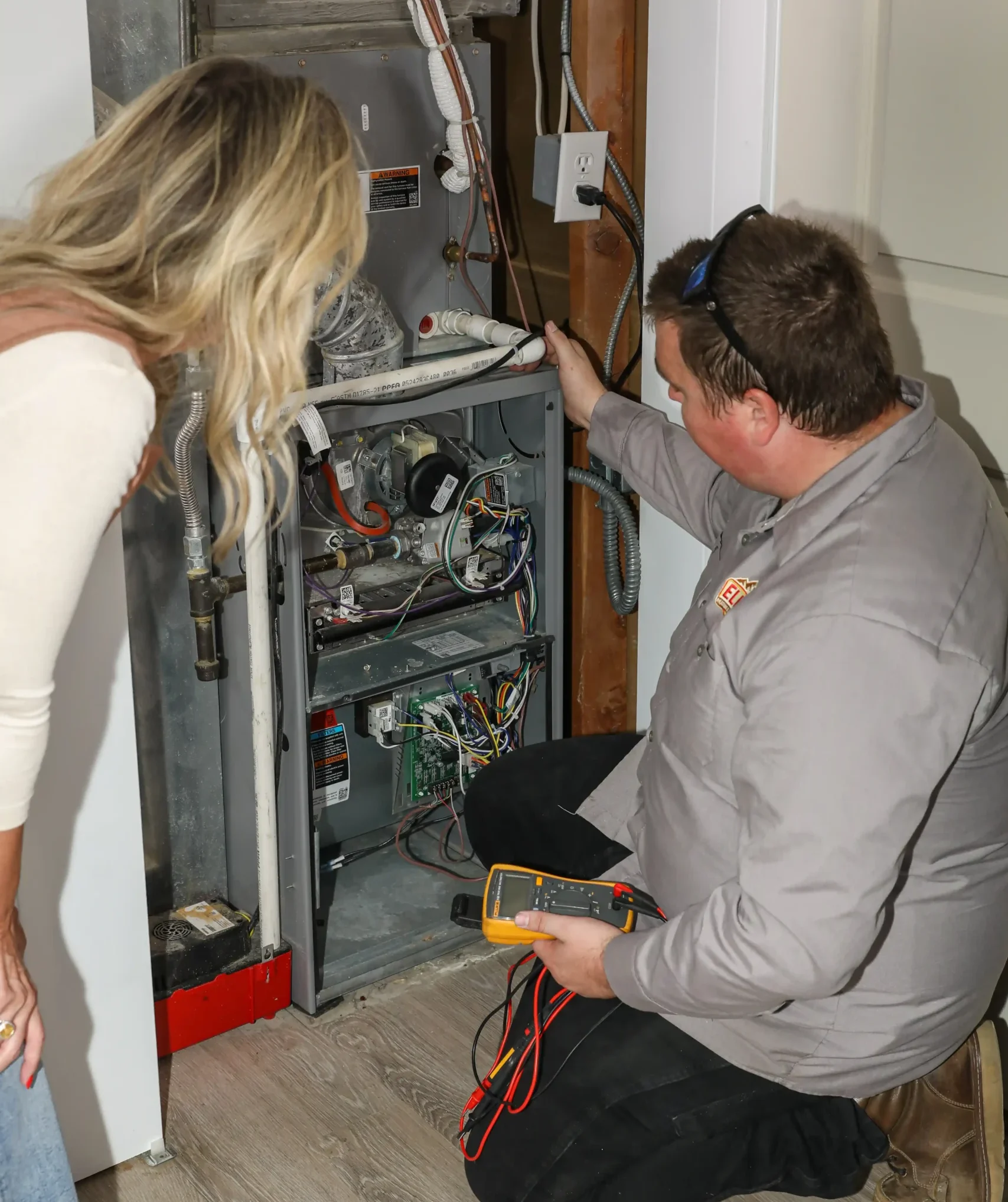
When you first start using your furnace during November and December, its operating noises can seem unusual or new. While some sounds are completely normal, other noises are a sign that something may be wrong with the unit. By reaching out to Elkhorn Heating, Air Conditioning, Plumbing & Electrical, you can determine the source of the noise and fix any problems before the coldest days of the year arrive.
So, why is my furnace so loud? And what can be done about it? To find out what different furnace noises mean and how to fix them, read on.
Quick Answer: When a Sound Needs Immediate Attention
While some operating noise is normal, any new, persistent, or worsening sounds should be addressed. Loud banging around the ignition, scraping, and noises accompanied by burning odors deserve prompt attention.
If you notice a gas odor, carbon monoxide (CO) alarm, smoke, or fire, immediately evacuate your home and call emergency services. These symptoms take precedence over this guide and represent a major safety hazard for your home and family.
Listen for Timing and Location, Not Just Volume
To determine what a furnace’s banging noise or squealing sound means, you have to go beyond just listening to the volume of the sound. When the sound occurs and where it occurs are important for diagnosing the issue. Without opening panels or going near moving equipment, you should pay attention to whether the sound seems to be coming from a register, the cabinet, or the ductwork.
Ordinary airflow can often cause a whistling sound, while duct expansion can cause a popping, ticking, or banging sound. Brief mechanical noises can also be normal for your furnace model. However, even though a noise may commonly occur with your furnace, it doesn’t mean it is safe. To make understanding furnace noises easier, we’ve broken down some of the common noises, when they occur, and what to do next.
Furnace Noise | Timing | Cause | What to Do Next |
Clicking | At startup | This is often due to normal controls or ignition components. | As long as it only occurs briefly at startup, it is likely not an issue. |
Whistling | During blower operation | This can be due to restricted airflow or duct-related issues. | Check your air filters and change them as needed. Additionally, verify that the vents are open and unobstructed. |
Banging or booming | At ignition | This is likely due to a combustion issue, such as delayed ignition. | Immediately stop using your unit. Reach out for a professional heating, ventilation, and air conditioning (HVAC) appointment. |
Rattling | While the furnace is running | A furnace rattling noise is likely related to loose components or ductwork. | If the noise does not go away, schedule a professional inspection. |
Popping | At startup or shutdown | This is likely due to the ductwork expanding or contracting. | This sound may not be an issue. Going forward, monitor the noise and reach out for help if the frequency or intensity changes. |
The volume of the noise does not determine the severity of the issue. Any new, persistent, or worsening sound should be addressed by a professional HVAC technician.
Common Furnace Noises and Possible Explanations
So, why is my furnace so loud? The type of noise can indicate the underlying cause, although professional testing is needed to properly diagnose the issue. As a homeowner, you can make the diagnostic process easier by determining what sound you are hearing, the timing of the noise, and the possible source.
Banging and Popping
Sometimes, a noisy furnace in Denver will produce a popping or banging noise. When this happens briefly during heating or cooling, it is often due to metal ductwork expanding.
However, it’s important to note that there is a major difference between duct expansion and ignition or combustion problems. If you hear a loud bang or boom during ignition, there is a combustion-related issue or delayed ignition. In this situation, you should immediately stop using your furnace and reach out to an HVAC technician for professional help.
Rattling
A rattling noise often stems from the blower operation. For example, there may be loose cabinet components, mechanical issues, or vibrating ductwork. Sometimes, blower motors and other equipment can produce rattling sounds. When a technician comes to your home, they will inspect the blower components, mounting hardware, and ductwork for loose parts.
Squealing and Scraping
If you hear a metallic scraping or high-pitched squealing sound, it may be due to the blower. Friction and worn bearings can cause this type of sound. Older furnaces may also have belts that create a squealing noise. Our technicians can check the blower assembly and motor to determine what is going wrong.
Humming and Buzzing
A low, quiet hum may be part of your furnace’s normal operation. If your furnace is humming loudly, it may be caused by electrical or mechanical malfunctions. For instance, these humming and buzzing noises can stem from a failing capacitor, faulty electrical components, or motor-related issues. All of these parts must be tested and evaluated by a professional.
Whistling
When a whistling noise is present, it typically means that there is some type of airflow restriction. If air has to move through a narrow opening, it can produce a whistling noise. You can troubleshoot on your own by making sure your registers and vents are open. Then, check the air filter and replace it as needed.
Besides clogged filters and blocked registers, this type of problem can occur if there are ductwork issues or other airflow problems. If your basic troubleshooting doesn’t work, you should call our team for a full inspection. We can check your airflow, test the static pressure in your system, and identify duct leaks or restrictions that could be contributing to the problem.
Repeated Clicking
Brief clicking noises during startup or shutdown are often part of the unit’s normal control and ignition sequences. You should reach out for help if you notice repeated clicking without successful ignition. This can indicate that there is an issue with the fuel delivery, controls, or ignition system.
Similarly, you should reach out for clicking that seems related to the inducer motor. If the motor isn’t working, the furnace may fail to vent combustion gases. In turn, this can trigger a safety shutdown.
When in doubt, you can always reach out to our team for a professional inspection. Many issues cannot be diagnosed by noise alone. Duct-related issues, for instance, are challenging to diagnose because noise can travel through the ducts and seem to come from a different source. By working with a professional HVAC technician, you can ensure an accurate diagnosis.
Safe Checks and What To Share With Elkhorn
If you noticed your furnace squealing or are worried about unexpected popping noises, a few troubleshooting tips may be able to help.
- Note Details: Pay attention to when the noise began and whether the filter was recently changed. You should also see if heat is being delivered and which settings are being used.
- Record if Safe: As long as it is safe to do so, you can record the noise from a safe distance. However, you should never attempt to restart an unsafe system.
- Check for Obstructions: Inspect the supply and return vents for obstructions. Make sure all of the vents in your home are open.
- Look at the Filter: After turning the unit off, inspect the filter according to your furnace’s manual. Verify that the filter is the appropriate size and type.
Important Safety Note: Never remove panels, tighten internal parts, or lubricate the motor yourself. You should never bypass switches if safety shutdowns occur. Additionally, do not touch wiring or adjust gas yourself. If you notice whistling noises, do not try to close registers to quiet the airflow.
When to Stop Use and What a Technician Diagnoses
As a homeowner, you should immediately stop using your furnace if you notice ignition bangs, persistent electrical or burning odors, or grinding noises. All of these symptoms should be inspected by a professional before you attempt to use your furnace again.
If you smell gas or sulfur, you should immediately leave your home. Do not operate switches or electronic devices. Once all of the occupants have evacuated to a safe outdoor location, you should call 911 or your utility provider’s emergency line.
Similarly, you should immediately evacuate your home if you notice smoke, the carbon monoxide (CO) alarm goes off, or there is a fire. Afterward, you should call emergency services before doing anything else.
Once you reach out for an HVAC appointment, our team will perform a few tests to determine the cause of the problem. We will start by localizing the source of the noise. Then, our technicians will assess your airflow and the assembly condition. Depending on your system, we will perform the applicable ignition and combustion checks. While the original sound will guide our testing, it is only one part of the entire diagnostic process.
Prevent Recurring Noise (Without Hiding the Cause)
As a homeowner, there are a few proactive steps you can take to prevent future furnace noises from occurring. If the following steps do not work, we recommend reaching out for a full HVAC evaluation.
- Change the Filter: First, check the filter to see if it is clean. Depending on the filter type, manufacturer recommendations, and operating conditions, the filter may need to be replaced every 30 to 90 days or at a different recommended interval.
- Clear Airflow Paths: Go around your home and see if the vents or registers are blocked or obstructed. Make sure furniture, carpets, and other belongings are kept away from the vents.
- Schedule a Maintenance Check: Routine maintenance can prevent problems from happening and spot minor issues before they escalate. We recommend performing a furnace tune-up each fall. Through our Comfort Plan, you can receive complimentary tune-ups and priority scheduling.
- Address Noises Promptly: Sometimes, homeowners will try to mask a recurring sound by adding insulation or changing the furnace enclosure. This approach only hides the sound. To remove the source of the problem, call our team for repairs.
When you reach out to our team for help, we’ll evaluate your airflow and performance. After completing a full inspection, we will walk you through the type of furnace repair or replacement that is needed.
Frequently Asked Questions
Is a popping duct the same as a furnace ignition bang?
No. The timing and where the noise happens are different. However, if you suspect an ignition bang, you should immediately stop using the unit. Ignition-related problems pose potential safety risks, so they need to be addressed by an experienced HVAC technician.
Can a dirty filter make a furnace whistle?
A furnace whistling noise can occur due to restricted airflow, but the cause may not be the filter. You can troubleshoot by replacing the filter if it is dirty. Do not try to run the unit without a filter because this allows dust and debris to get inside the unit.
Does humming mean the motor is failing?
If you notice a furnace humming, it doesn’t mean the motor is failing. Humming can occur due to normal electrical or mechanical sounds, although it can also be caused by an abnormal vibration. The best way to determine if it is a problem is to note changes in the sound and your system’s performance.
Can I keep running a noisy furnace?
Not necessarily. A loud boom or banging noise at startup may be due to an ignition issue. If this is the case, you must immediately shut off the unit. The furnace should also be turned off if you hear grinding, thumping, screeching, or persistent squealing noises. If you notice gas odors, burning smells, CO alarms going off, smoke, or fire, you should evacuate your home and call 911.
Take the Next Step With Elkhorn Heating, Air Conditioning, Plumbing & Electrical
Why is my furnace so loud? If you are concerned about an unexpected furnace noise, we can help. Our Comfort Specialists offer same-day service and upfront pricing in the Denver and Littleton area. We will diagnose the issue and clearly explain the best course of action.
Reach out for furnace repairs by contacting Elkhorn at 720-526-3647.
Service Request
Contact
"*" indicates required fields