Furnace Starts Then Stops? Why It Won’t Stay Running
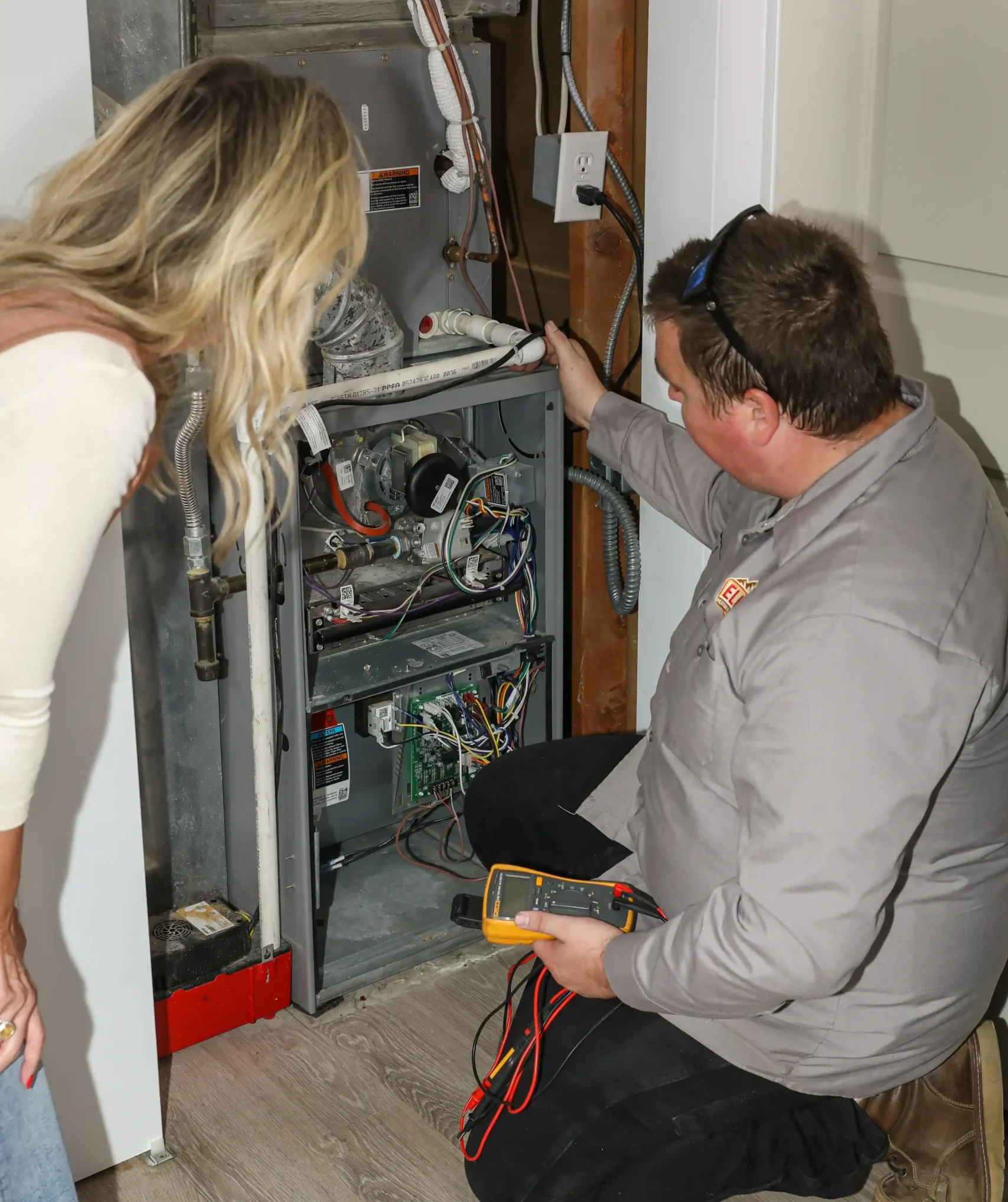
After a particularly cool morning after months of cooling use, you switch your thermostat to “heat” mode to take the chill off. Instead of running smoothly, the furnace starts, then stops. When this happens, the culprit could be the unit’s airflow, flame proving, controls, or safety mechanisms. By understanding common causes and signs of each issue, you can determine when you can troubleshoot yourself and when you should reach out to Elkhorn Heating, Air Conditioning, Plumbing & Electrical for help.
What Exactly Is Starting and Stopping?
When a furnace starts then stops, a few things could be happening. As a homeowner, it’s useful to note whether there is ignition followed by flame loss, repeated attempts without ignition, several minutes of heat followed by a shutdown, or the blower continuing to operate after the burners are off.
How you respond to the problem will depend on the symptom you’re experiencing and the cause. For instance, the blower will normally run slightly longer than the furnace to remove residual heat. If the furnace keeps shutting off and your home doesn’t reach the set point, there is likely an underlying issue responsible.
To make the diagnostic process easier, you should start by noting which signs are occurring. For example, pay attention to unusually frequent or brief on-and-off cycles. This is known as short cycling and can provide a clue about what’s going on. You can also look through the existing viewing window if it’s safe to do so without removing panels. Flickering flames, a lack of a flame, and unusual noises are all strong indications of the problem.
Common Reasons a Furnace Will Not Stay Running
When a furnace won’t stay running, there are a few possible causes that may be at fault. By understanding the common causes, you can determine whether basic maintenance will solve the problem or professional repairs are necessary.
Restricted Airflow and Overheating
If your unit’s airflow is restricted by a dirty filter, blower speed issues, ductwork problems, or blocked returns, it can cause overheating and high-limit trips. A tripped high-limit switch doesn’t necessarily mean the switch is bad. Often, this occurs because the system is too hot. Many of these airflow issues can be prevented or detected early by scheduling routine maintenance appointments.
Interrupted Flame Proving
A flame sensor is responsible for detecting whether a flame is present after ignition. If the sensor doesn’t prove the flame, the control board shuts off the gas valve to prevent unburned gas from continuing to flow. Because of the gas and combustion involved, you should leave sensor inspections and cleaning to an experienced technician.
Ignition Faults
Dirty pilot assemblies, cracked hot surface ignitors, and weak spark ignitors can all result in failed ignition. Depending on the ignition system, you may hear repeated clicking, see that a pilot fails to ignite, or notice that the burners never light. Multiple ignition failures can lead to a system lockout.
Thermostat Commands
Dying batteries, loose wiring, and incorrect settings can cause thermostat problems. For instance, the system may ignore thermostat commands or cycle on and off frequently.
Venting or Condensate-Related Safety Responses
With high-efficiency furnaces, blocked PVC intake and exhaust flues or clogged condensate traps can mean that the pressure switch fails to close. This triggers a safety shutoff. An accessible obstruction at an exterior intake or exhaust termination may be safely cleared, but persistent pressure-switch or condensate problems require professional diagnosis.
Equipment Sizing
Before installing a heating, ventilation, and air conditioning (HVAC) system, the technician should always perform a Manual J load calculation or an applicable existing load calculation. If your furnace is oversized for the home’s heating load, it may satisfy the thermostat quickly and operate in shorter, more frequent cycles. For homeowners, the furnace will appear to cycle on and off quickly.
However, equipment sizing isn’t a new issue. If this is the problem, you’ll likely notice that the furnace has relatively short cycles soon after it is installed.
Safe Checks Before Scheduling Service
Before you call for assistance with a furnace that turns on then off, there are a few basic checks you can safely do on your own first. For your safety, you should never perform repeated resets, remove the panel, bypass the safety switch, clean the flame sensor, test live electrical systems, adjust the gas, or reach inside a running unit.
- Confirm the Mode: Verify that the unit is in “heat” mode. It should have a sensible set point that is above room temperature. The schedule should be set to the appropriate temperature as well.
- Check Batteries: If your thermostat uses batteries, check the batteries and replace them as needed.
- Inspect the Filter: After turning the equipment off and consulting the manufacturer’s guide, inspect the filter. If it is clogged, replace it with the appropriate size and MERV rating. Never run your unit without a filter in it.
- Clear Furniture From Registers and Grilles: Move any furniture, clothes, curtains, or other belongings away from the supply register or grille.
- Observe Moisture Sources: Pay attention to any standing water or moisture in or around your unit.
- Note the Thermostat Display: If your furnace keeps shutting off, try checking the thermostat display to see what mode the unit is in and if any error codes are visible.
When To Stop Troubleshooting and What a Technician Checks
If your furnace short cycling continues and basic troubleshooting doesn’t solve the problem, it’s always a good idea to reach out for a professional inspection. You should also immediately call for help if you experience any of the following situations.
- Your home has no heat in cold conditions, especially if vulnerable family members are present.
- You experience furnace short cycling in Denver that continues after basic troubleshooting.
- The furnace keeps experiencing safety shutdowns.
- There is a gas odor or the carbon monoxide alarm goes off. If this occurs, first leave the building. Then, call your gas utility’s emergency line or 911 once you are safely outside. Afterward, you can call our Comfort Specialists for repairs.
- Immediately evacuate the premises and call emergency services if you notice signs of smoke or a fire.
- If you notice repeated ignition failures or flame loss shortly after ignition, stop troubleshooting and call for repairs.
- You noticed unusual noises, such as booming, grinding, or screeching sounds.
Once you reach out to our team, we’ll quickly run a series of diagnostics to determine the problem. We’ll check the flame signal, airflow performance, ignition sequence, draft and venting, condensate line, temperature rise, and thermostat commands. Through our testing, we can figure out the best solution to your heating issues.
Frequently Asked Questions
Why does my furnace shut off after a few seconds?
If the ignition is interrupted or the flame sensor doesn’t sense a flame, your furnace will shut off after a few seconds. Because you can’t diagnose a sensor issue from duration alone, it’s important to schedule professional testing if your furnace experiences repeated failures.
Is it normal for the blower to keep running after the heat stops?
Many furnaces are designed with a short fan delay that keeps the fan running to safely cool down the heat exchanger and optimize energy efficiency. If the blower remains on for an unusually long time, check whether the thermostat fan setting is set to “on.” If it is set to “auto” and the blower continues running, the furnace may have experienced a fault or safety condition that requires diagnosis.
Can a dirty filter make my furnace turn on and off?
Yes, restricted airflow can cause overheating and safety shutdowns. If replacing the filter doesn’t resolve the issue, call for professional repairs.
Should I keep resetting a furnace that will not stay on?
No. Repeatedly resetting the furnace can override opportunities to recognize an ongoing fault or safety problem. You should note any error information or symptoms. Then, relay this information to the HVAC technician when you schedule professional diagnostics.
Schedule a Furnace Diagnostic Visit
Struggling with a furnace that starts then stops? Our Comfort Specialists can help. We offer upfront pricing and same-day service in the Denver and Littleton area.
Schedule your next furnace maintenance and repairs today.
Service Request
Contact
"*" indicates required fields