Can Hail Damage Your Outdoor AC Unit? A Post-Storm Inspection Guide
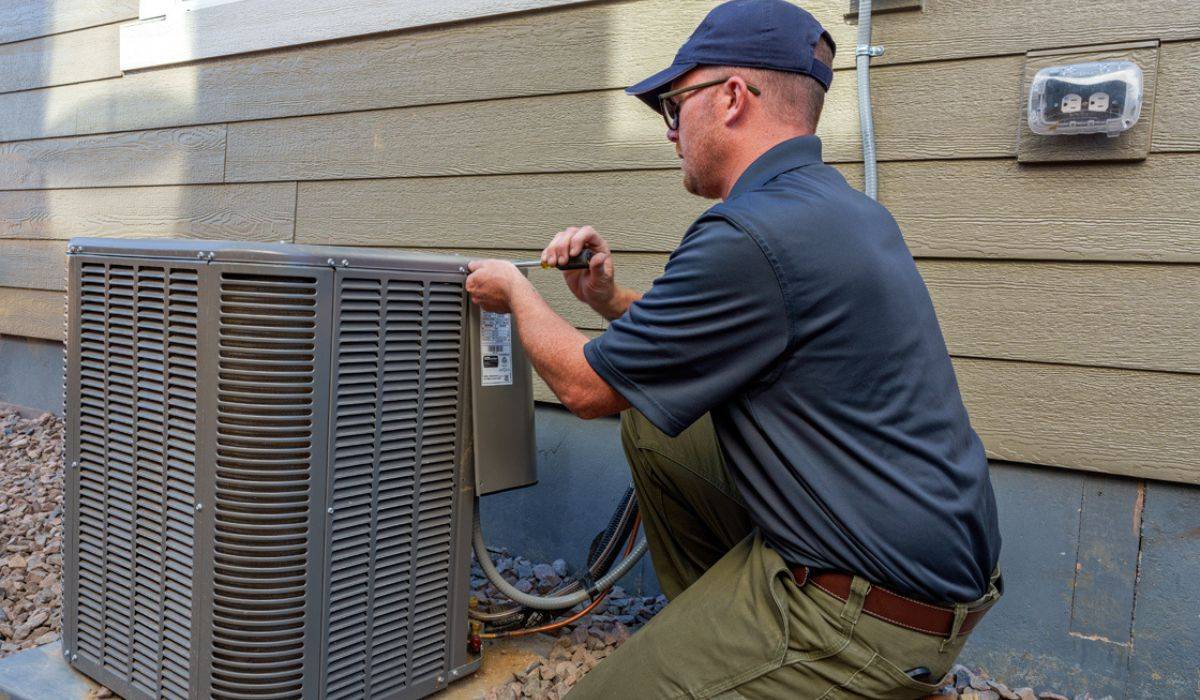
When wind, hail, and thunderstorm season arrives in Denver and Littleton, the resulting hail dents and condenser damage can quickly impact your unit’s performance. During a heating, ventilation, and air conditioning (HVAC) inspection, Elkhorn Heating, Air Conditioning, Plumbing & Electrical can diagnose damage and help you determine the best course of action.
So, can hail damage outdoor AC units? To learn more, read on.
Quick Answer: Yes, Hail Can Damage an Outdoor AC Unit
Hailstorms are known for denting condenser fins, damaging coil surfaces, bending fan guards, and loosening panels. Leaves and other storm debris can also clog your outdoor unit, reducing its efficiency and leading to eventual repairs.
While cosmetic dents may mar the appearance of your unit, they aren’t the same thing as performance-affecting damage. A full HVAC inspection is important to determine whether your unit is safe to run or requires further service.
What Parts Are Most Exposed During a Storm?
Hail damage to an AC unit in Denver is largely going to occur in areas that are exposed. Often, bent condenser fins and coil damage are the most obvious sources. Part of your air conditioner storm damage may also involve the fan guard, top grille, fasteners, and cabinet panels.
Any electrical disconnects, control components, or exposed wiring near the unit can end up getting loosened or damaged by the storm. Refrigerant line insulation can be harmed by hail. Depending on where the hail hits and how, it may cause erosion, pooling water, shifting of the condenser pad, or drainage problems
Safe Post-Storm Inspection Checklist
Should I run my AC after hailstorms? Before your AC is safe to use, it’s a good idea to complete the following checklist.
- Before you do anything, wait until the storm has passed. Do not inspect your outdoor unit until conditions are safe to do so.
- Then, inspect for obvious dents. Pay attention to any flattened fins, loose panels, or debris. If the hail blocked the unit’s airflow in any way, you’ll need to schedule repairs before using your unit.
- See if hail, leaves, branches, mulch, or any other debris are packed around the condenser.
- Listen for unusual noises during startup, such as rattling, buzzing, or scraping sounds.
- Note whether cooling performance appears to be affected by the storm.
- For your safety and the safety of your AC, never touch wet electrical components, open panels, or push tools into the coil fins.
If you aren’t sure whether hail damaged condenser fins or other components, it’s better to play it safe and get a professional inspection before using your AC again.
Signs Hail Damage May Be Affecting AC Performance
After conducting your outdoor AC unit’s post-storm inspection, pay attention to how your AC continues to operate. If the hail has caused damage, you’ll likely notice some of the following signs.
- The AC seems to run longer than normal.
- You notice loud rattling or scraping noises coming from the outdoor fan.
- The AC struggles to cool your home.
- Your outdoor unit won’t start.
- The breaker trips frequently.
- Your AC short cycles, which means it turns on and off more frequently than normal.
- There are flattened fins or debris blocking airflow through your outdoor unit.
- You see that hail damaged the cabinet or the line-set insulation.
Reduced airflow isn’t just a cosmetic issue. When airflow around the outdoor unit drops, it affects the condenser coil’s ability to release heat. In turn, this forces your compressor to run for longer than it normally does. Eventually, the added workload can cause the compressor to overheat or break down.
What Elkhorn Heating, Air Conditioning, Plumbing & Electrical Checks During a Post-Storm AC Visit
Once you reach out to our team, we’ll quickly schedule an AC visit to inspect your unit. We’ll start by looking at your outdoor unit to verify the coil condition, fan operation, and cabinet damage. Our Comfort Specialists will test your system performance, check the unit’s electrical safety, and look for issues with your refrigerant line.
After checking your unit for signs of damage, we can determine if you need a basic cleaning, minor repair, or component replacement. If your unit has sustained significant damage and is already approaching the end of its lifespan, we can discuss whether an AC replacement is necessary.
No matter what the recommendation is, we’re committed to delivering same-day services, upfront pricing, and no hidden fees. Our Comfort Specialists will clearly walk you through the recommended repairs, so you can make a no-pressure decision about what to do next.
Repair vs. Replacement After Hail Damage
If you’re wondering, “Can hail damage an outdoor AC unit?” Elkhorn Heating, Air Conditioning, Plumbing & Electrical can help. Our team can review your storm damage to determine if you’re dealing with Denver hail AC repair or a full replacement. We’ll perform a thorough assessment and consider a few key factors.
When To Repair
Repairs are often the best choice if we’re dealing with debris or a cleanable coil blockage. Our team can repair many fan problems and minor electrical issues.
When To Replace
A replacement may be a better choice if you have an older condenser unit and major coil damage. Similarly, repeated failures and poor efficiency before the storm are signs that your unit was already approaching the end of its lifespan.
Budgeting for unexpected repairs is challenging. To make it easier to perform large repairs and replacements, we offer 100% no-interest financing for our local homeowners.
How To Reduce Future Storm Risk
Once you’ve fixed an AC unit that’s not working after a hailstorm, the next step is preventing the damage from happening again.
- Maintain 2 to 3 feet of clearance around the unit.
- Trim nearby branches so that they don’t fall on the AC.
- Ask a technician if there are safe protective options you can use.
- Never block airflow while your AC is operating.
- Schedule a cooling tune-up each spring.
- Call for maintenance after severe hail, wind, or debris-heavy storms.
One of the most important things you can do to prevent the likelihood of breakdowns and repairs is to schedule routine maintenance. To make this easier, Elkhorn Heating, Air Conditioning, Plumbing & Electrical offers a Whole Home Comfort Plan that features two complimentary tune-ups per year, special promotions, and repair discounts.
Frequently Asked Questions
Can I run my AC after a hailstorm?
Possibly. Start by inspecting your unit for signs of hail damage. If there are no signs of damage present and it starts normally, your AC may be fine to run.
However, major dents, debris, electrical damage, unusual noises, and loose parts are signs of potential damage. In these instances, you should turn off your AC right away and schedule service.
Do dented AC fins always mean the unit is ruined?
No, not necessarily. In some cases, fin damage is mostly cosmetic. Even if the fins do affect performance, our Comfort Specialists may be able to repair them easily.
You may have to replace the unit if there is widespread flattening. In this situation, the damaged fins can restrict airflow around your unit and result in performance-related issues. When our team comes to your home to inspect your system, we can evaluate the impact and help you decide on the best course of action.
What AC damage should I check after hail?
To avoid performance issues and prevent additional damage, it’s important to inspect your AC after the storm. Without touching the AC, look for signs of flattened fins, loose panels, or damaged line insulation. Pay attention to any signs that the airflow may be blocked. If there are unusual sounds, note what they are to tell your HVAC technician.
Sometimes, the damage to your AC isn’t visually obvious. After a storm, you should always pay attention to your cooling performance and schedule service if there is a significant change.
Should I cover my AC during hail season?
While an AC cover can protect your unit from hail, it can also potentially block airflow when your AC is running. Because of this, you should always talk to a technician about safe options before you use a hail cover.
Get Help for HVAC Hail Damage
So, can hail damage an outdoor AC unit? Unfortunately, Denver storms can have a negative impact on your AC’s performance and efficiency. If hail hits your outdoor AC unit, Elkhorn Heating, Air Conditioning, Plumbing & Electrical can inspect your condenser, coil, fan, and electrical components through our same-day services in Littleton and Denver.
Our Comfort Specialists can explain what damage is cosmetic, what components require repairs, and what can safely wait. All of our recommendations come with upfront pricing, so you know exactly what to expect before work begins.
Service Request
Contact
"*" indicates required fields