Author: Jessie Ryan Sy

Spring Electrical Safety Checklist for Denver Homeowners

When spring arrives, most homeowners immediately think about what they need to do to prepare their heating, ventilation, and air conditioning (HVAC) equipment for warmer weather. While HVAC maintenance is important, your electrical system also matters. All of your electrical system components have to work extra hard to power your AC unit, outdoor entertainment space, and pool pump during the summertime.

By completing the following spring electrical safety checklist in Denver, you can keep your home safe during peak season. If you do discover a problem, Elkhorn Heating, Air Conditioning, Plumbing & Electrical offers the same-day services you need.

Is Your Electrical Panel Ready for the Cooling Season? 

The average central air conditioner uses between 3,000 and 3,500 watts of energy, making it one of the largest electrical consumers in your household. When it turns on, it draws a huge surge of power. 

If your electrical panel is appropriately sized, these HVAC surges shouldn’t be a problem. When panels are already close to full capacity, this can cause issues. Your electrical panel may be struggling if you notice any of the following symptoms.

  • Circuit breakers trip when your AC starts.
  • You smell burning odors.
  • The panel feels warm to the touch.
  • Lights flicker when your AC or other large appliances turn on.

You may also need a larger panel to match summertime electrical demand. For example, many homes run extension cords to power their outdoor equipment. This isn’t safe long term, so it’s better to invest in a panel upgrade.

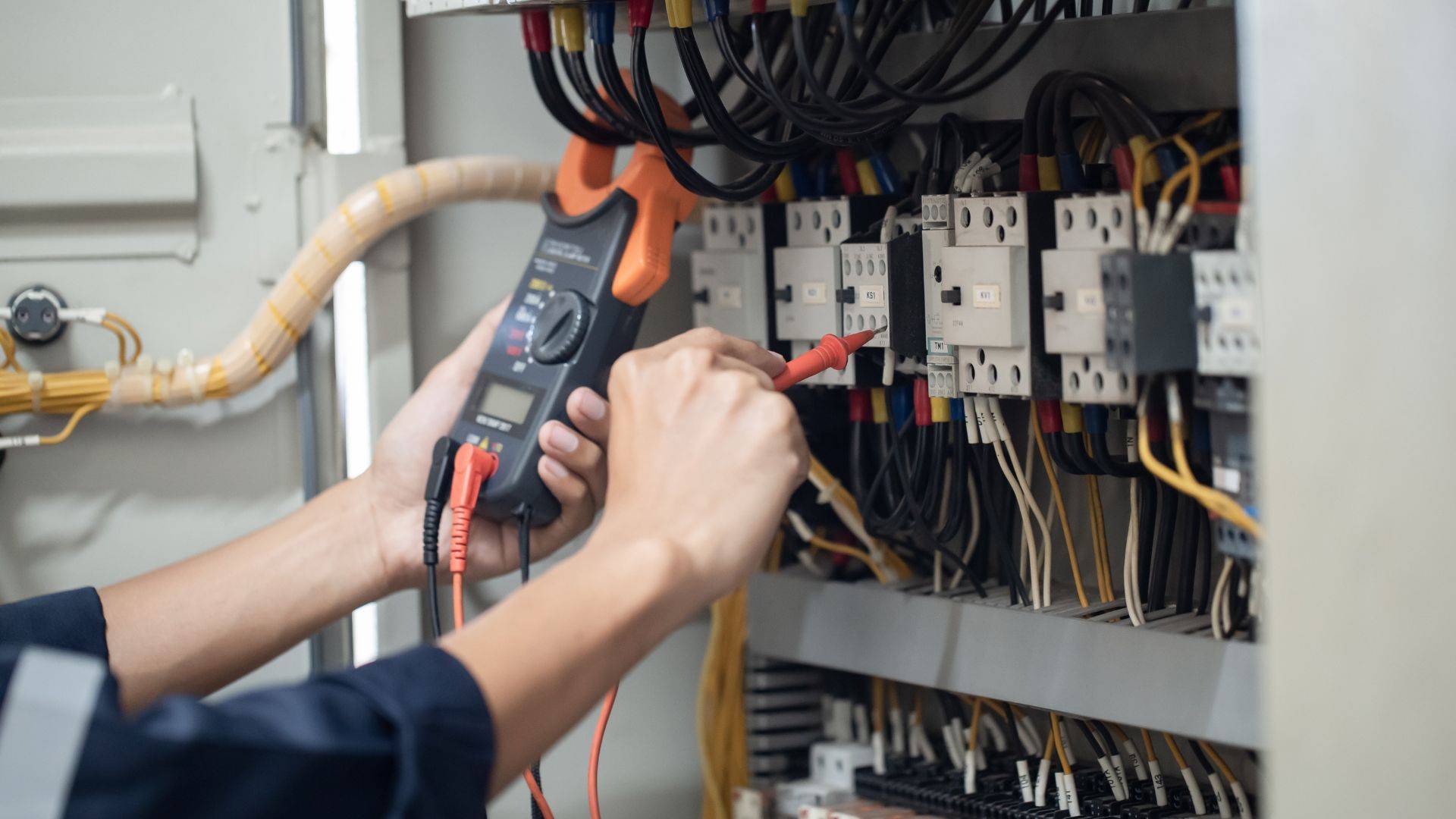
Your electrical panel is basically a metal box that splits your home’s electrical supply into different circuits. Then, each circuit has its own circuit breaker that can trip if it is overloaded. Normally, your panel will be located in your garage or basement.

Before the 1990s, homes generally had a 100-amp panel because families didn’t have a bunch of EV chargers, smart home systems, gaming systems, and home offices. If your home was built before the 1990s, your panel may need an upgrade. Additionally, an update is important if you’ve added major appliances to your home or carried out recent renovations. During our inspection, we’ll make sure your electrical panel is ready for summer in Denver by calculating your home’s ideal capacity and checking for common problems.

Spring Electrical Safety Checklist in 7 Steps

With this spring electrical safety checklist for Denver, local homeowners can protect their homes from electrical complications. 

  1. Inspect your electrical panel visually. The first step is to check the panel for signs of a problem. Note any burning odors, scorch marks, rust, or moisture. Don’t touch anything in the panel. If you do notice unusual symptoms, you should call one of our electricians right away.
  2. Test all GFCI outlets. GFCI outlets are designed to trip if moisture is present. A GFCI outlet compares the incoming and outgoing current. If the amount of current is different, the GFCI trips and shuts the circuit down. You can make sure your outlets are working by using the “test” button to trip the outlet. Then, you can push “reset” to restore power. If the outlet doesn’t trip or reset properly, schedule professional repairs.
  3. Check outdoor outlets and lighting. As a part of your outdoor electrical safety checklist, look at your light fixtures, outdoor lighting, and wiring for signs of damage. For example, Colorado’s freeze-thaw cycles can result in cracked covers, moisture inside outlet boxes, and exposed wires.
  4. Test smoke and carbon monoxide (CO) detectors. Your CO detector batteries should be replaced once per year. At a minimum, the CO detector should be replaced with a new one every 10 years.
  5. Look for signs of wiring stress. While you can’t see your home’s electrical wiring, you can still look for common signs that something may be wrong. Start by checking to see if outlets are warm to the touch, spark, or make crackling noises. Additionally, note any lights that flicker without an obvious cause. All of these symptoms could mean that there are wiring problems or loose connections in your home.
  6. Evaluate your surge protection. Whole-house surge protection diverts power surges so that they don’t harm your electrical systems. This is especially common during Colorado’s spring and summer thunderstorms. Through surge protection, you can prevent lightning damage to your HVAC unit, electronics, and smart home systems.
  7. Review seasonal electrical loads. From season to season, your family’s electrical consumption changes. If you plan on using landscape lighting, an EV charger, a pool pump, or a hot tub this year, now is your chance to double-check the condition of your connections and the size of your circuits.

Whole-Home Surge Protection: What It Is and Why It Matters 

whole-house surge protector is installed at your electrical panel. When a voltage spike occurs, the surge protector’s job is to protect all of your electrical circuits. This device is distinctly different from power strips because power strips are only designed to protect the appliances that are directly plugged into them.

Colorado is known for being one of the worst states for lightning strikes. A single strike can cause damage to your HVAC system, smart thermostat, gaming system, computer, and home wiring. Getting a whole-house surge protector in Denver costs a fraction of what it would cost to replace one major appliance. 

When you get your spring panel inspection, our team can also install your whole-house surge protector. We’ll check your panel’s capacity and determine the best protection level for your home’s needs.

Outdoor Electrical Prep for Spring and Summer 

With spring on the way, it’s time to start thinking about your outdoor lighting, outlets, and generator. Our freeze-thaw cycles can lead to winter ground movement. In turn, this can loosen buried wiring and harm fixture bases. Before spring is in full swing, double-check your lighting connections. 

You should also inspect your outlet covers and weatherproof boxes. Replace any that are missing, cracked, or impossible to close.

Spring is an excellent time to plan a wiring and electrical panel upgrade in Denver. Many homes in Castle Rock, Highlands Ranch, and Parker have large outdoor living spaces that are perfect for entertaining. To make the most out of these spaces, it’s a good idea to install extra circuits. 

You may also need dedicated circuits installed if you plan on adding a hot tub hookup, EV charger, or outdoor lighting. Homeowners may also want to install a generator so that they can avoid unexpected power outages during summer storms. Reach out to our electricians before the busy summer season arrives to get your home ready.

Signs Your Home’s Wiring Needs Professional Attention 

To protect your family, home, and electrical systems, it’s important to pay attention to any signs of a problem. If you notice the following malfunctions, give our electricians a call right away.

  • Frequent Breaker Trips: When breakers keep tripping, it is a sign that you have an overloaded circuit, a ground fault, or a short circuit. If you notice that this occurs when you run your AC at the same time as a large appliance, we likely need to update your home’s circuits.
  • Buzzing Sounds: Immediately call for help if you hear a buzzing noise. Similarly, an outlet or switch that is warm to the touch is a safety hazard.
  • Flickering Lights: Your lights shouldn’t flicker or dim whenever a large appliance turns on.
  • Burning Odors: Schedule an electrical inspection if you notice burning odors near your outlets, panel, or switches.
  • Two-Prong Outlets: Many older homes in Englewood, South Littleton, and other Denver neighborhoods have two-prong outlets that don’t have a ground. For your safety, these outlets should be updated.

The presence of any of these problems is an immediate sign that a home wiring inspection in Denver and Littleton is necessary. At Elkhorn, our licensed electricians can come out to your home to quickly diagnose the underlying problem and find the best solution. We’ll also explain our findings in plain language, so you can understand exactly what is going on.

Frequently Asked Questions

Do I really need an electrical inspection?

If any of the following situations describe your home, we recommend scheduling a spring electrical inspection in Colorado. 

  • Your home is already 20 years old or older.
  • You have experienced some of the warning signs above.
  • You have added major appliances.

Even if you haven’t dealt with these concerns, getting an annual check is good practice and a way to protect your home’s electrical systems.

How does whole-home surge protection work? 

When you get whole-home surge protection, we install it in your electrical panel. If an electrical spike occurs in the power grid, the surge protection operates like a shield that protects your electronics.

How do I know if my panel needs an upgrade? 

If you currently have a 100-amp panel, you should get an upgrade if you have an EV charger, central AC, or multiple high-draw appliances. One of our Comfort Specialists can provide a full evaluation when we conduct your spring inspection.

Can Elkhorn handle electrical work along with HVAC and plumbing? 

Absolutely. Elkhorn has electricians, plumbers, and HVAC technicians who can handle all of your home services. As a result, local residents can easily book combined spring inspections that address all of their home’s systems in fewer visits.

Improve Your Electrical Safety

Concerned about your breakers tripping? It’s time to tackle the spring electrical safety checklist for Denver homes. Summer places a higher demand on local electrical systems. Keep your home safe by having one of our licensed electricians check your panel and test your safety devices.

Call now to schedule your electrical appointment.

Spring Plumbing Inspection: 7 Things Denver Homeowners Should Check Now

Colorado winters can be incredibly hard on our plumbing. Freezing temperatures, freeze-thaw cycles, and frozen ground can harm your pipes, sewer lines, and outdoor fixtures. Ice expands as it freezes, which stresses joints and pipes. When the snow thaws, it can overwhelm your drainage systems. 

With spring already underway, it’s time to make sure your plumbing system is in optimal condition. At Elkhorn Heating, Air Conditioning, Plumbing & Electrical, we offer spring plumbing inspections in the Denver and Littleton areas.

Learn more about the best plumbing checklist for Denver homes, especially properties in the foothills and older buildings.

The 7-Item Spring Plumbing Checklist 

As part of your springtime checklist, there are seven key tasks that you can do to make sure your plumbing system isn’t damaged from last winter. 

1. Test Your Sump Pump

Your sump pump system is responsible for keeping floodwaters out of your home. Because of our storms and heavy rain, it’s a good idea to perform a sump pump spring test in Colorado.

To test your sump pump, pour a 5-gallon bucket of water into the pit. If everything is working properly, you should see the float rise. Once the pump activates, the water level in your pit should start to drop. Outside your home, you should see water leaving the discharge line. The water should be released at least 10 feet away from your foundation. 

If the pump doesn’t activate or the discharge line is clogged, give us a call for sump pump repairs. We also recommend getting a replacement once your sump pump is more than 7 to 10 years old. The best time for any sump pump repairs and replacements is in the spring before heavy rains arrive.

2. Inspect Your Outdoor Faucets and Hose Bibs for Freeze Damage

If you forgot to do your outdoor faucet and hose bib winterization check in Denver, these devices can quickly become damaged. Even with proper winterization, damage can happen. 

To check for damage, turn on each of your outdoor faucets. Then, check for leaks, a lack of flow, or a reduced flow rate. When freeze damage occurs, it can crack the valve body, which is invisible inside the wall. You may notice a steady drip from the pipe connection or handle if damage has occurred.

Make sure to check outdoor plumbing in the front and back of your home. Additionally, don’t forget about irrigation connections and faucets in your garage.

3. Check Your Water Heater for Wintertime Sediment Buildup

Over the winter, sediment can build up in your water heater. As part of your water heater maintenance, it’s essential to flush your tank. By doing so, you can boost your energy efficiency and extend the unit’s lifespan.

When you flush the tank, note any unusual sounds and other warning signs. If there is sediment buildup, you’ll often notice rumbling or popping noises. Meanwhile, moisture around the base and signs of corrosion mean you should schedule a professional inspection right away.

For the best balance of comfort and efficiency, set your water heater to 120°F. This temperature is hot enough to prevent bacterial growth and cool enough to prevent scalding.

4. Run and Test All Floor Drains

In Colorado, many homes are designed with floor drains in the basement. These drains often go unused for months at a time, but they are vital if any flooding occurs. 

A basic test can make sure your drains are ready for spring. Start by pouring water down one of the drains to confirm flow. If the water backs up or drains slowly, there is likely a blockage. You’ll need to schedule a professional drain cleaning to fix it.

This basic test is also important because it fills the P-trap. This trap is the curved section of pipe that you see underneath your plumbing fixtures. Because it holds water, it blocks sewer gas from entering your home. When fixtures aren’t used frequently, the P-trap can dry out and allow foul odors to come inside.

5. Inspect Visible Pipes for Signs of Winter Stress

As a spring home maintenance for plumbing in Denver, we also recommend looking for signs of winter stress and hidden leaks. In your basement and utility areas, look for any discoloration, small drips, or moisture around joints. On copper pipes, moisture may cause a patina to develop. 

Exterior walls are near the frigid outdoor air, so they naturally stay colder. Because of this, you should be especially observant of pipes that are near exterior walls.

6. Clean Gutters and Check Downspout Drainage Direction

Your gutters provide a clear path for snow melt and spring rain to leave your home. If you have disconnected downspouts or clogged gutters, the water can end up near your foundation. Besides causing mold growth and moisture in your basement, this also increases your sump pump load. When functioning properly, your downspout extensions should send the water at least 5 to 6 feet away from your foundation.

7. Walk the Exterior of Your Home

As the last step in your outdoor plumbing spring startup in Colorado, walk around the perimeter of your home. You should note any areas where the soil has settled against the foundation. This can cause low spots and pooling water. To fix this problem, you should grade the slope away from your home.

Before you wrap up your checklist, look at your window wells. Remove any debris, and make sure the covers are securely in place.

When To Call a Plumber vs. Handle It Yourself 

While you can handle plumbing winterization and spring maintenance on your own, some tasks should be left to the expert.

Things You Can Handle on Your Own

In most cases, you should be able to handle the following tasks on your own. If you need help with flushing the water heater or other maintenance tips, our comfort specialists are only a phone call away.

  • Testing the sump pump
  • Visually checking your pipes 
  • Flushing the water heater
  • Pouring water down drains
  • Cleaning gutters
  • Checking hose bibs

Instances Where You Should Call a Plumber for Help

We recommend immediately calling a plumber in the following situations.

  • Outdoor faucet leaks that are inside the wall
  • A sump pump that keeps running or won’t start
  • Unusual water heater sounds
  • Water heater corrosion
  • Backed-up floor drains
  • Active pipe leaks

If you have a new home that was built after 2005, your system may still be under the manufacturer’s warranty. By arranging for a professional inspection, you can document issues for making a warranty claim.

It’s also important to note that there is a sewage backup risk during heavy snowmelt. Excess water saturates the municipal systems, which can lead to sewage flowing into your basement drain. Because of this, we recommend installing a backflow preventer valve if you don’t already have one set up.

Looking for help with your plumbing maintenance? Elkhorn’s licensed plumbers can handle all of these plumbing tasks in a single visit. We’re able to serve customers throughout the Littleton, Aurora, Parker, Castle Rock, Englewood, and broader Denver metro area.

Foothills and Older Home Considerations 

Our region has unique climates and neighborhoods that require special care. Properties in Morrison, Indian Hills, and Evergreen have steep terrain and faster snowmelt runoff, so they face added plumbing risk in the spring.

Old homes in Harvey Park, Capitol Hill, University, South Littleton, and other established Denver neighborhoods often contain cast iron or galvanized pipes. These pipes are more vulnerable to wintertime stress, so pay attention to any rust-colored water when you turn on your faucets in the spring.

In Aurora, Brighton, and Commerce City, first-time homeowners have new buildings that have probably not been inspected since they were built. Because of this, it’s a good idea to schedule a spring walk-through.

No matter what neighborhood you live in, it’s important to inspect the vapor barriers and insulation in your crawl spaces. Moisture intrusion can happen during snowmelt, so this step is key for protecting your home from mold growth and moisture damage.

FAQs 

How often should I do a spring plumbing inspection? 

We recommend performing an inspection each year in the spring. The best time is after the last freeze has passed so that we can determine if there has been any winter-related damage. Because of the climate difference, foothills properties will generally need to wait until late April or May.

How long does this take? 

As long as there aren’t any problems, you can expect the full spring plumbing checklist in Denver to take around an hour. Our professional inspection covers all of the important tests and checks that you can’t complete on your own.

Can I combine this with an HVAC or electrical tune-up? 

Absolutely. Our comfort specialists handle plumbing, electrical, and HVAC systems, so you can easily combine all of these tasks into a single springtime appointment. For our clients, this makes planning home services much easier.

What are the most common spring plumbing problems in Denver? 

In Denver, the most common problems we see are dry P-traps in floor drains, untested sump pumps, cracked hose bibs, and sediment-heavy water heaters. From testing your sump pump each spring to winterizing hose bibs, these problems can be prevented. When they do occur, they can be easily fixed as long as they are caught early.

Schedule Your Next Plumbing Inspection

Ready for your seasonal inspection? If you’ve already completed your spring plumbing checklist in Denver, don’t forget to schedule a professional inspection. Our comfort specialists can ensure your water heaters, sump pumps, drains, and outdoor plumbing are working properly. 

Call us now to schedule your appointment.

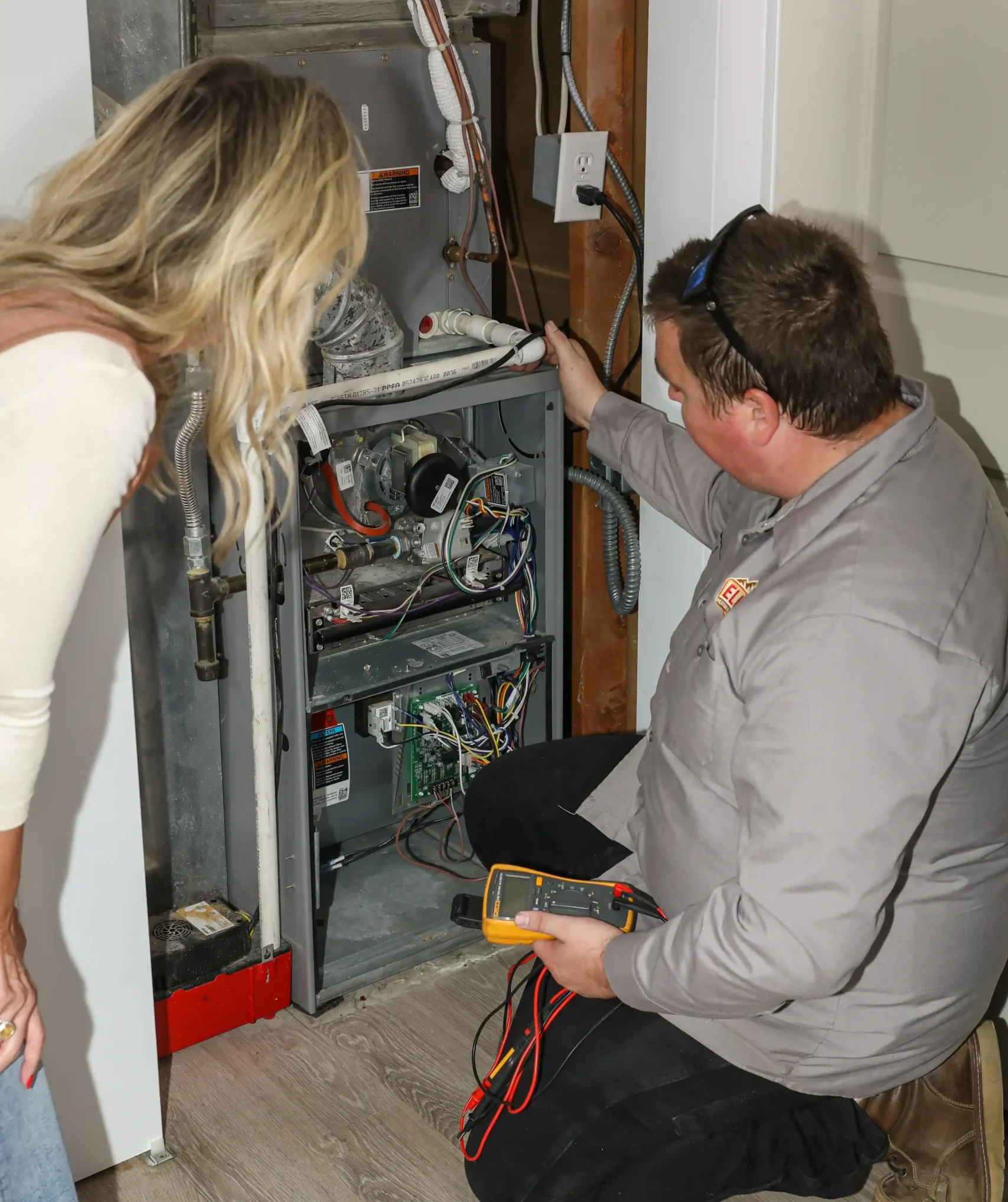
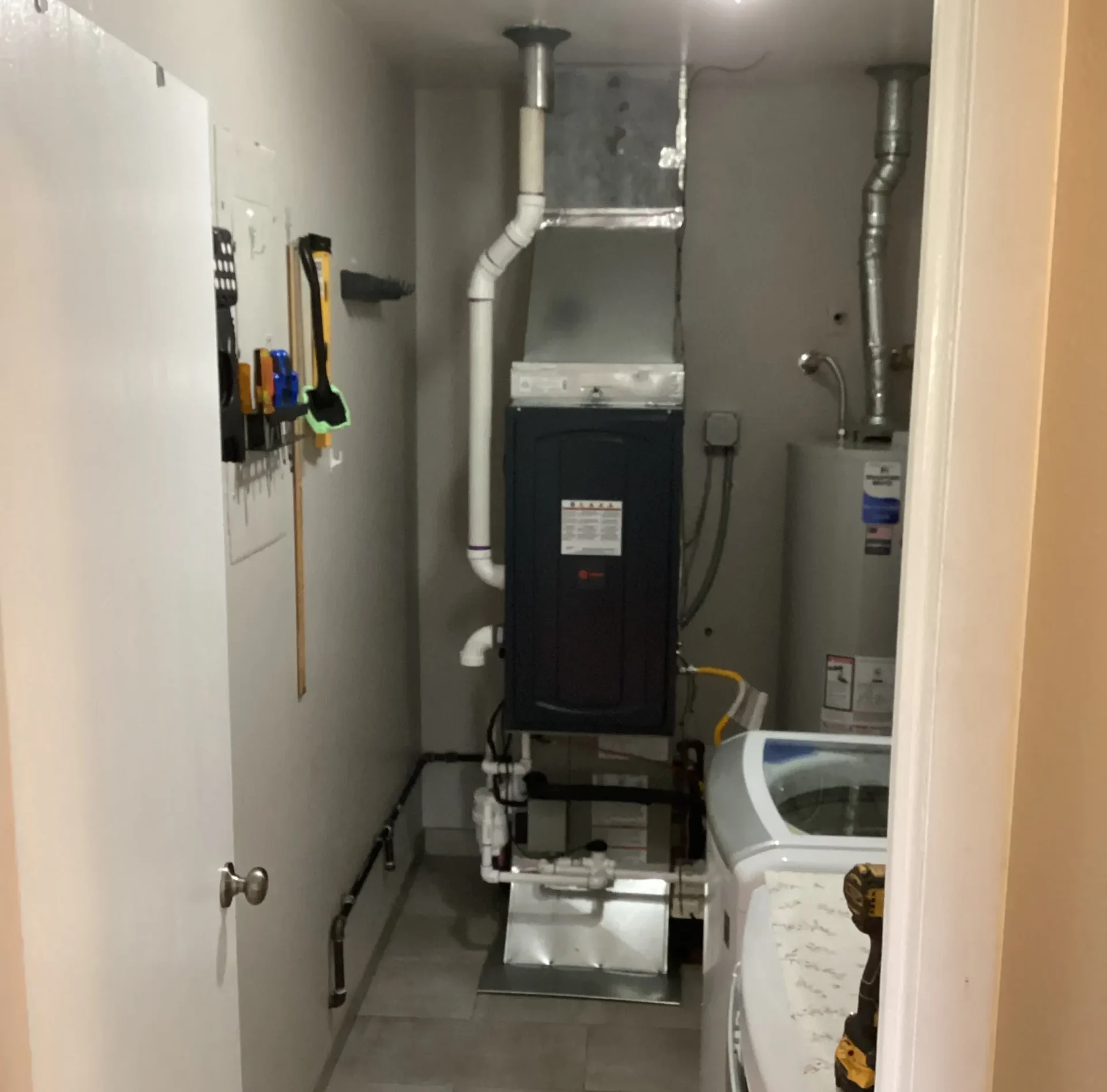
Elkhorn HVAC technician working on a furnace, performing maintenance or repair on the HVAC system.

End-of-Season Furnace Care: What Denver Homeowners Should Do Before Summer

After running a furnace for six or seven months in a row, it’s important to take care of the unit before turning it off for the summertime. Most homeowners think about furnace maintenance after fall arrives. By that point, most heating, ventilation, and air conditioning (HVAC) companies are already booked out. 

With the help of Elkhorn Heating, Air Conditioning, Plumbing & Electrical, you can make sure your home is ready for the shifting seasons. Our HVAC technicians have better availability during the spring, so you have time to plan out your repairs and replacement needs.

To get you started, let’s look at the steps involved in end-of-season furnace maintenance in Denver and which tasks need to be handled by a professional.

When Heating Season Ends in the Denver Metro 

There’s no fixed date for when to stop running a furnace in Colorado. Most homes will need heat until May. In Morrison, Evergreen, Indian Hills, and other foothills neighborhoods, it’s common to keep the heat on until June.

As a result, many local homeowners end up using heat and air conditioning in the same week. Even though there are hotter days ahead of us, you shouldn’t turn off your furnace prematurely. Instead, let your thermostat handle the heating and cooling transition.

Typically, the best time for end-of-season furnace maintenance in Denver is when our overnight lows are consistently above 45°F to 50°F. For most neighborhoods in the Denver area, this normally occurs between late April and May.

End-of-Season Furnace Maintenance Checklist: 8 Steps 

To get started, use this spring furnace maintenance checklist for Colorado homes. When in doubt, you can always reach out to our HVAC technicians for professional diagnostics and support.

  • Step 1: Replace the air filter. If your furnace isn’t working right, one of the best troubleshooting tips is to try replacing the filter. Poor airflow can impact the furnace’s performance and increase the likelihood of repairs. Since your furnace has been in use since October, it’s time to give it a fresh filter.
  • Step 2: Inspect the area around your furnace. By looking for a few common signs, you can spot potential issues before they escalate. Check around your furnace and ductwork for soot marks, stains, condensation, or any other unusual signs.
  • Step 3: Clean accessible surfaces. Next, wipe down all of the surfaces you can easily reach. Dust accumulates over the course of the heating season and can negatively impact air quality.
  • Step 4: Vacuum the supply and return vents. Your return vents can collect dust and debris during the heating season. By vacuuming the vents, you can boost airflow and minimize respiratory issues.
  •  Step 5: Check carbon monoxide (CO) detectors. For the safety of your family, you need to verify that your CO detectors have not expired. You should also replace the batteries at least once per year.
  • Step 6: Note any issues from the past winter. If you notice higher-than-normal energy bills, unusual noises, uneven heating performance, short cycling, or other problems, remember to share them when your HVAC technician arrives for your seasonal HVAC tune-up.
  • Step 7: Adjust thermostat settings for spring. Now that spring is here, it’s time to adjust your thermostat settings with a moderate schedule. Your goal is to maintain your personal comfort during this transition period without causing excessive short cycling.
  • Step 8: Schedule a professional spring tune-up. One of the most important things you can do to prevent furnace repairs is schedule a spring tune-up each year. Through this spring maintenance, you can diagnose and fix problems now instead of waiting for the first chilly night of October.

Warning Signs Your Furnace Sent You This Winter 

As we reach the heating season end, maintenance in Colorado is essential for the safety and longevity of your unit. If you notice any of the following symptoms, it’s time to schedule professional repairs.

  • Odd Noises: Any grinding, high-pitched whining, or banging is a sign you need to get your unit repaired.
  • Short Cycling: If the furnace turns on and off more frequently, you may be dealing with thermostat malfunctions, an oversized system, a dirty filter, or an underlying repair.
  • Uneven Performance: When different rooms are hotter and colder than others, there may be a duct problem or a failing blower motor at fault. An aging system can also gradually lose capacity.
  • Yellow or Flickering Pilot Flame: If you have a yellow or flickering flame, it means there is incomplete combustion in an older unit. This is a major safety and efficiency concern, so it needs to be remedied right away.
  • Unusually High Energy Bills: A sudden increase in energy bills without a clear explanation is a sign that some of the furnace’s components may be starting to wear down.

If you notice any of the previous diagnostic clues, you don’t have to panic. You have plenty of time to fix the problem and schedule furnace care before summer in Denver.

The Repair-vs.-Replace Spring Assessment 

Deciding between a furnace repair and a replacement can be challenging. At Elkhorn, we won’t try to sell you on a product you don’t need. Our comfort specialists offer honest evaluations, so you can make the right choice for your home. 

The off-season is the best time to decide on repairs and replacement. You aren’t under pressure, so you can easily get quotes and compare financing options. To help you choose the best decision for your family, consider the following factors.

  • Age: A standard furnace lasts around 15 to 20 years. If your furnace is already in this range and requires repairs, it’s likely time to plan on a replacement.
  • The 50% Rule: Look at the cost of repairs vs. the replacement price. If the repair cost is 50% of the price of a new system, it’s generally better to get a replacement instead.
  • Efficiency Upgrades: The Annual Fuel Utilization Efficiency (AFUE) represents how efficient the furnace is at transforming energy into heat. A higher AFUE is better. Older furnaces often have an 80% AFUE rating. By switching to a modern, 95%+ AFUE model, you can significantly reduce your energy costs.

No matter what option you choose, Elkhorn’s 100% no-interest financing can make affording your new installation easier. 

Foothills and Mountain Property Considerations 

When it comes to scheduling a furnace inspection during spring in Denver and Littleton, it’s important to consider the local environment. Based on where you live, your furnace, boiler, or heat pump will require different types of care.

Homes in Morrison, Evergreen, and Indian Hills have higher elevation and more extreme temperatures, which pose unique challenges. Often, these areas have older homes with unusual heating configurations. For example, many of them rely on radiant heat, boilers, or propane. These configurations require specialized attention.

Absentee owners also need to be proactive about their pipes. You shouldn’t fully shut down your HVAC system unless you have taken precautions against frozen pipes.

Elkhorn understands what our local neighborhoods and climate need. Thanks to our higher altitude, there is less oxygen per cubic foot. Because this impacts combustion, furnaces have to be specially calibrated. Our comfort specialists understand these foothill communities, so we can safely optimize your high-altitude HVAC setup.

How Spring Furnace Care Connects to Fall Readiness

Whether you want to care for your furnace or plan for a heat pump installation, a spring tune-up is a chance to touch base with our comfort specialists, order parts, and optimize your HVAC installation. The spring tune-up helps us create a baseline for your system, so we can easily spot concerning changes in the fall. Plus, planning installations and repairs now allows us to avoid any lead-time delays that commonly occur in the fall and winter.

In most cases, a furnace that has been professionally inspected during the spring only needs a filter change and thermostat adjustment before the heating season begins in fall. Our team makes this inspection easy through our Whole Home Comfort Plan. This plan features spring and fall tune-ups, so your family can enjoy better peace of mind.

FAQs

When should I stop running my furnace in Colorado? 

There is no set date for when you should start your HVAC spring transition in the Denver metro area. Many Denver homes are still using heat in May. Instead of just shutting off the system automatically, let your thermostat be in charge of when your system should be in heat mode.

Can I run my furnace and AC on the same day? 

Absolutely. Today’s thermostats have an auto mode that allows them to heat and cool as needed. If your thermostat is not equipped with this feature, it’s time to consider getting a new thermostat installation.

Is it worth getting a furnace tune-up in spring? 

We strongly recommend getting a furnace tune-up during the spring. You aren’t dependent on using the furnace at this time, so it’s a good opportunity to clean the furnace and schedule necessary repairs. Because our technicians are more available in the spring, you’ll have an easier time scheduling your appointment. Additionally, a spring furnace tune-up means you can catch potential problems before next winter arrives.

Keep Your Furnace in Optimal Condition

Through end-of-season maintenance in Denver, you can gain peace of mind and make sure your furnace is ready when fall arrives. Our Whole Home Comfort Plan makes furnace maintenance easier through priority scheduling and complimentary tune-ups.

Schedule your furnace tune-up while our spring calendar is still open. Call us today.

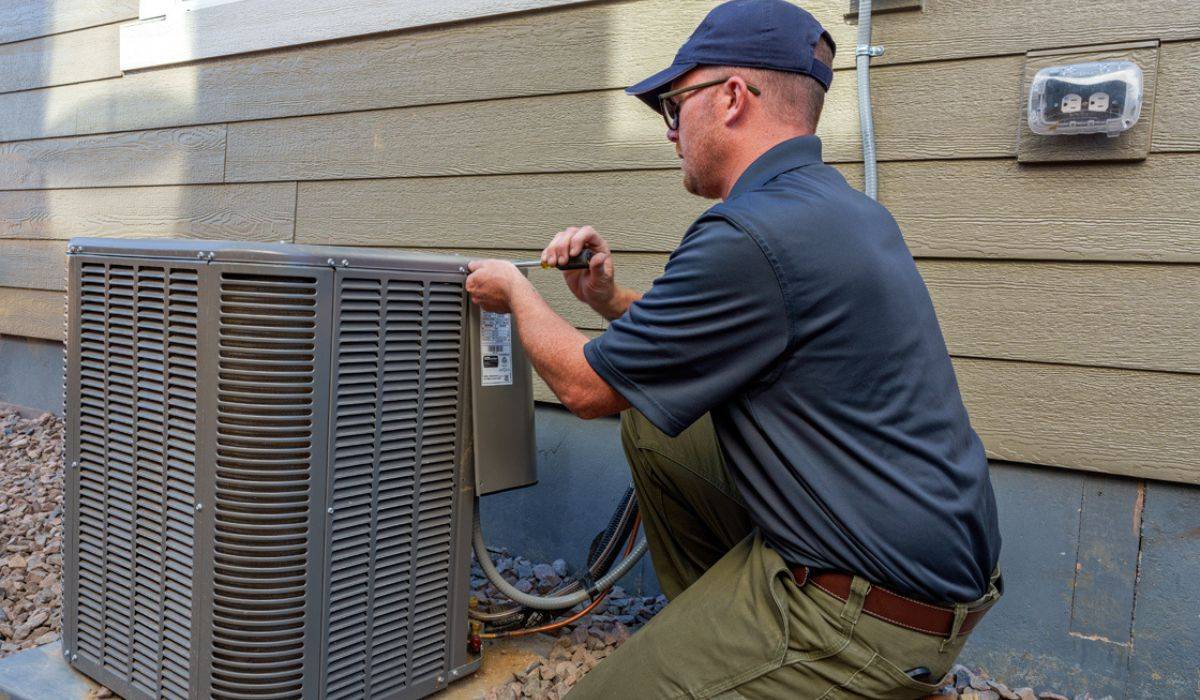
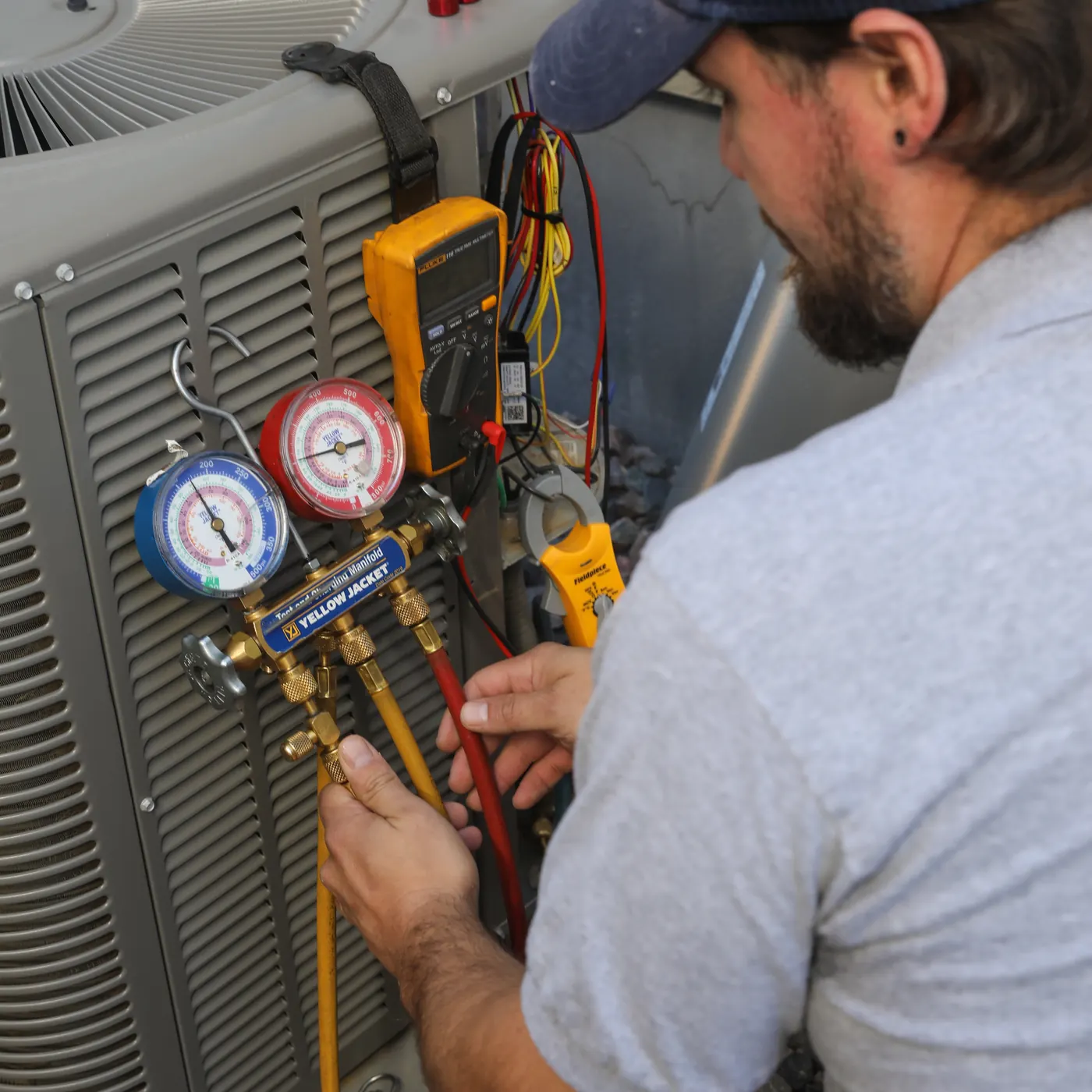
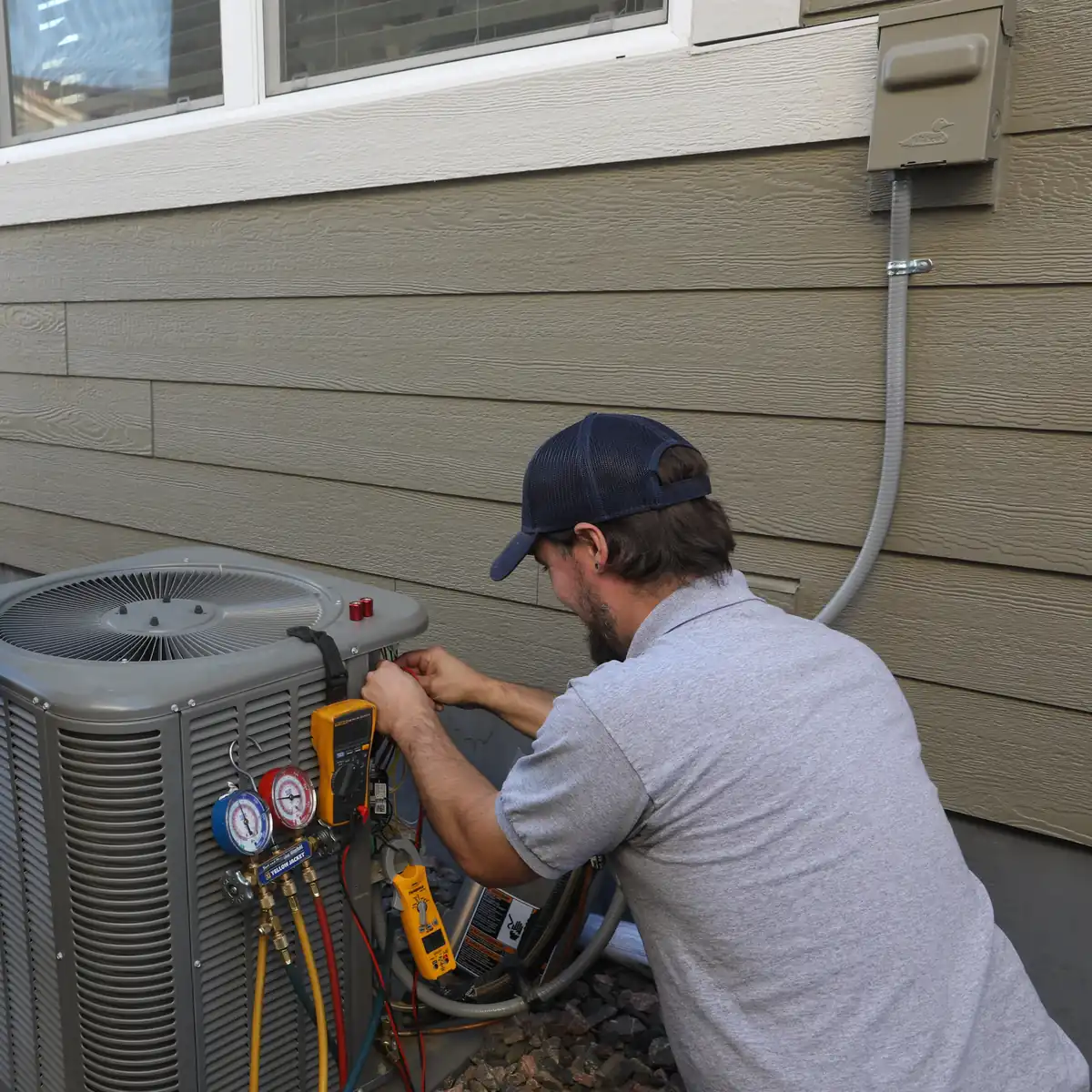
Image of an AC repair service in Denver by Elkhorn Heating & Air

Your Complete Spring AC Startup Guide for Denver Homeowners

While some U.S. cities use their ACs constantly, this is not the case in Colorado. We often let our ACs sit idle for six or seven months in a row. Because of this extended dormancy, there’s a risk that the AC won’t work when you finally switch it on. Elkhorn Heating, Air Conditioning, Plumbing & Electrical can help you prevent unexpected complications through timely tune-ups and AC repairs.

By completing your spring AC maintenance checklist in Denver, you can be confident that your AC is ready for the hottest days of the summer. To see what your checklist entails, what to watch out for, and when you need a Comfort Specialist, read on.

When Denver Homeowners Typically Switch From Heat to Cooling 

Thanks to our semi-arid climate, we have fairly unpredictable spring temperatures to deal with. In Denver, we can experience 80°F days in March and snow flurries in May. However, most homeowners start to think about switching on the AC in late April or May. 

Deciding when to turn on an AC in spring in Colorado should be based on what’s comfortable for your family and how ready your AC is for warm weather. During the transition period between March and May, homeowners will likely need to use heating and cooling each day. By preparing your AC in advance, you can guarantee that your heating, ventilation, and air conditioning (HVAC) system is ready for everything.

To keep it cool this summer, first-time owners need to be especially proactive. In our newer subdivisions in Brighton, Aurora, and Commerce City, homeowners should inspect their builder-grade systems before hot weather arrives.

DIY Spring AC Startup Checklist: 7 Steps 

To learn how to start an AC after winter, start by working through the following checklist. In addition to handling the following maintenance tasks, you should also schedule your AC maintenance appointment with one of our Comfort Specialists.

  • Step 1: Check and replace the air filter. If you haven’t replaced your air filter since last fall, it’s time to do so. This is easily one of the most effective things you can do to boost your unit’s energy efficiency.
  • Step 2: Inspect the outdoor condenser unit. Debris can block the airflow in your outdoor unit. To prevent this from happening, remove any leaves and debris within 2 to 3 feet of the unit. Then, trim any bushes or plants in the same space.
  • Step 3: Check the condensate drain line. You can quickly check for a clogged drain line by pouring a cup of water down the line. Clogs can lead to indoor water damage, so it’s important to catch them early.
  • Step 4: Switch the thermostat to cooling mode. Before you start up your unit for another year, you need to verify that it’s working. Test it by switching the AC to cooling mode. Then, set the temperature a few degrees lower than your room temperature. If your AC is working properly, you should hear the outdoor unit kick on right away. 
  • Step 5: Listen for unusual sounds. If you hear buzzing, clicking, grinding, or complete silence, it’s time to get your air conditioner checked out by a professional.
  • Step 6: Run it for 15 minutes and check the airflow. As part of your spring AC maintenance checklist in Denver, you should run your AC for 15 minutes and check all of your home’s vents for airflow. If there is weak airflow coming from specific vents, your ductwork needs to be looked at.
  • Step 7: Verify the breaker is switched on. Some homeowners shut their AC breaker off as part of their winterization process. If your AC won’t turn on, check your electrical panel before assuming that something is wrong with your unit. 

Signs Your AC Needs a Comfort Specialist After Winter 

If your AC is not working after winter in Colorado, you can troubleshoot by monitoring it for the following common signs and symptoms.

  • Short Cycling: Short cycling is when a unit turns on and off more rapidly than it should. An AC that short cycles may have a faulty component or a dirty filter. Alternatively, this could occur if the AC is oversized. While you can troubleshoot by replacing a filter, faulty components and oversized systems must be addressed by a professional.
  • The AC Blows Warm Air: Sometimes, an AC will turn on and only blow warm air. This problem is likely due to compressor issues, airflow restrictions, a refrigerant leak, or a thermostat problem. You can troubleshoot by making sure the AC is set to the appropriate temperature and cooling mode. If this doesn’t fix your problem, you’ll need to call in an expert.
  • Pooling Water: If there is water pooling around the indoor unit, the condensate drain line is likely clogged. You can try flushing it with vinegar. Alternatively, our team also has professional tools that can remove stubborn clogs.
  • The AC Won’t Turn On: This can occur if there is a failed capacitor, electrical connection, or contactor. These problems can only be diagnosed and repaired by a professional.
  • Unusual Odors: While musty odors mean there is likely mold in your drain pan or ductwork, a burning odor stems from electrical components. In all of these circumstances, you should schedule repairs with a licensed technician.

What a Professional Spring AC Tune-Up Includes 

Besides your routine maintenance tasks, you should also plan for your spring AC tune-up in Denver and Littleton. During our professional inspection, we will carry out the following tasks.

  • We will check refrigerant levels and adjust them as needed.
  • Our technicians will tighten and test your electrical connections. 
  • The evaporator and condenser coils will be cleaned.
  • We’ll measure the airflow across your supply and return vents.
  • Your thermostat will be calibrated. Then, we’ll double-check that it is programmed properly.
  • Our technicians will flush the condensate drain line.
  • We’ll perform final safety and performance checks before we leave.

At Elkhorn, we won’t just sell you on a service. Our team is committed to providing upfront pricing and honest advice. If an emergency strikes, our same-day services have you covered.

Common Spring AC Issues in the Denver Metro 

When it comes to HVAC spring maintenance in the Denver metro area, there are a few local factors you must work against.

  • Elevation: We’re about 5,280 feet in elevation, which means more intense UV degradation on your unit’s outdoor components. Prompt maintenance can help you catch this issue before the component fails.
  • Dry Climate: Due to our dry climate, we often get more dust in our ductwork and air filters. In addition to changing air filters and vacuuming ducts, you can alleviate this problem with the help of an air purifier. Air purifiers are also important add-ons to have during wildfire season.
  • Temperature Swings: Spring days can vary from 80°F during the day to 30°F at night. In response, your HVAC system has to shift between heating and cooling during the same 24-hour window.
  • Hail Damage: During summer storms, hail can dent condenser fans and cause hidden damage to your outdoor unit.
  • Aging Ductwork: Englewood, Littleton, and South Denver suburbs have homes that were built between the 1970s and 1990s. As a result, these properties often have aging ductwork that reduces AC performance.

Smart Thermostat Tips for the Heating-to-Cooling Transition 

Whether you have ductless mini-splits, a heat pump, or an air conditioner, the right thermostat settings can help you stay comfortable without spending a significant amount on energy costs. During the spring transition, we recommend using auto mode so that your thermostat can automatically switch between heating and cooling. If your thermostat can’t do this, it’s time to consider a new installation. 

For the best energy efficiency, consider your dead band. The dead band is the difference between your heating and cooling set points. Typically, 3°F to 5°F is a good gap for staying comfortable without causing the unit to short cycle. You should adjust this set point for the day and night so that your home is ready for Colorado’s drastic temperature swings.

FAQs

Is it too early to turn on my AC in spring? 

Absolutely not. Your HVAC exists to keep you as comfortable as possible. Your AC doesn’t know what month it is. If you are uncomfortably hot, switch it on. However, don’t forget to complete your AC maintenance beforehand.

How long should I wait after turning on the AC to know if it’s working? 

As part of your AC maintenance before summer in Denver, you should always test out your AC to see if it is working properly. Once you switch it on, wait 15 to 20 minutes to see if it will reach the appropriate temperature. If it doesn’t, you should schedule AC repairs

Should I get a tune-up even if my AC seems fine? 

Absolutely. Preventive maintenance is essential for spotting minor problems before they escalate into major emergencies. HVAC systems are more likely to break during periods of intense usage, so a tune-up today can help you avoid an AC failure on the hottest days of the year.

Get Your AC Ready for Summer

Through our Whole Home Comfort Plan, residents can receive annual tune-ups, priority scheduling, and special discounts. If you’re struggling to wrap up your spring AC maintenance checklist in Denver, we can help. Beat the summer rush by scheduling your spring AC tune-up today.

Call Elkhorn Heating, Air Conditioning, Plumbing & Electrical for professional diagnostics, an annual tune-up, and proactive repairs.