
Why Is My Upstairs So Cold? Troubleshooting Uneven Heating During Littleton’s Deep Freeze
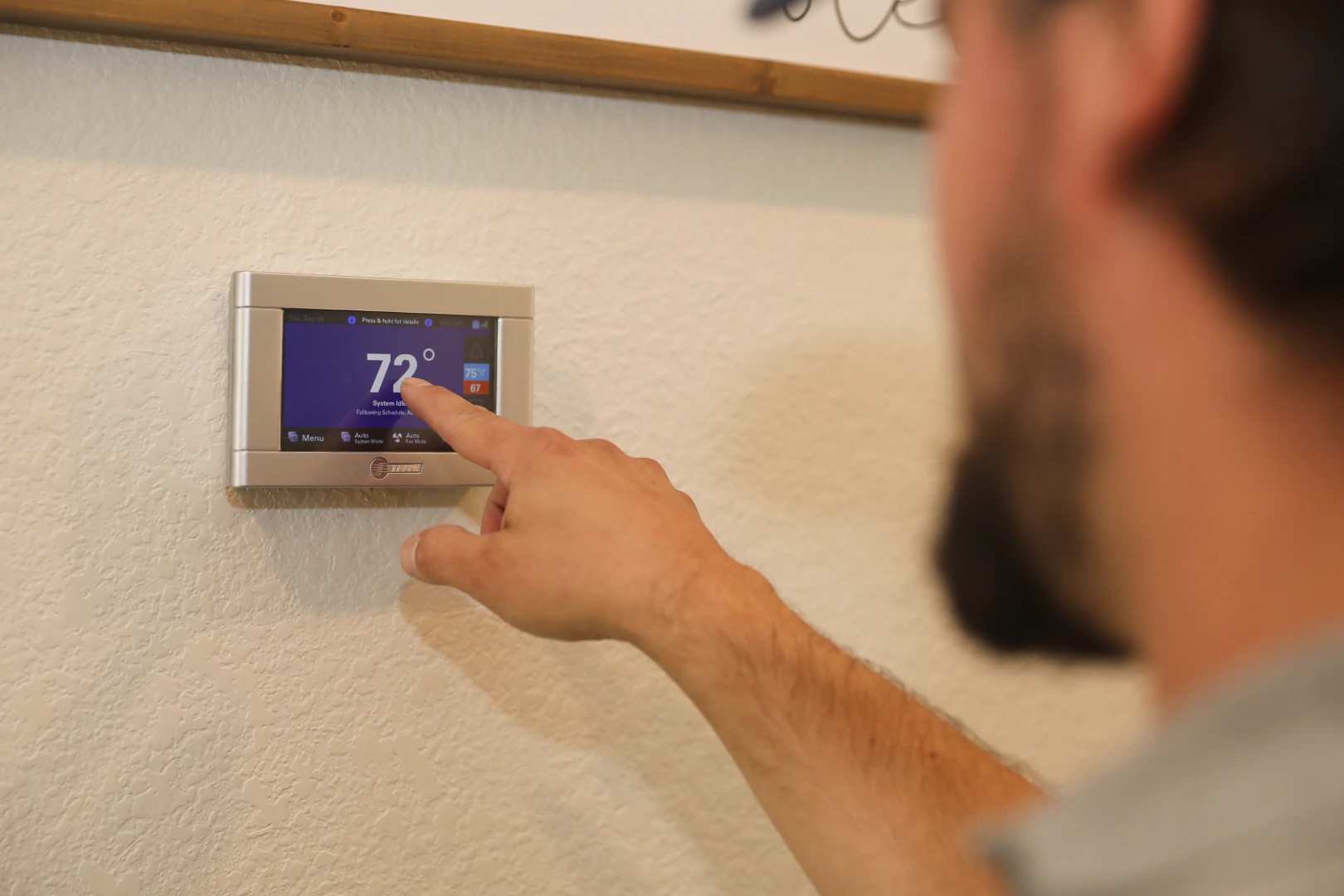
The wind is howling, and you can see snow drifting down. Thankfully, your family is cozy and warm in your family room. At 8:00 PM on a January evening, your family room temperature is a cozy 72°F.
However, all is not well in the rest of your house. As you put the kids to bed, you realize that their upstairs bedrooms feel like an icebox.
In many Denver homes, there is a nightly thermostat war between freezing upstairs bedrooms and sweltering downstairs rooms. Fortunately, this isn’t an unsolvable problem. Thanks to a little troubleshooting and basic physics, our technicians can quickly resolve uneven heating in a two-story house in Denver.
The Physics: Why Heat Doesn’t Behave
Within your Denver home, basic physics is working against your family’s comfort. Even with the best heating, ventilation, and air conditioning (HVAC) system, solar gain and the stack effect can impact your indoor comfort.
The “Stack Effect”
While the stack effect is a normal process, it can result in your rooms feeling unusually cold. Hot air naturally rises. Once the hot air reaches your attic, it can escape through gaps in the ceiling before the air is able to warm the rest of your home. Additionally, heat transfer also occurs through your ventilation.
When hot air escapes through gaps in your attic ceiling, it creates a vacuum effect that pulls cold air in through your basement rim joists. This can also lead to cold air inside your home.
Solar Gain
Another factor leading to thermostat issues causing wars is the sunshine. South-facing windows experience solar gain. These windows get extra sunshine, so the rooms get extra warm. The thermostat in your hall can sense this added heat, causing it to shut off.
However, your north-facing rooms don’t have the same solar gain. Once the thermostat switches off, every north-facing room feels much colder than the rest of your home.
You’ll also notice another effect in your west-facing bedrooms. During the wintertime, the low angle of the sun causes west-facing rooms to get extra warm. During the afternoon and evening hours, western rooms will feel uncomfortably hot.
Ductwork Design
Finally, your home’s ductwork design may be working against you. Many builder-grade homes in Littleton are designed with undersized ducts. Because they are undersized, they can’t push air to the far corners of your second story. As a result, many homeowners experience uneven heating in two-story houses in Denver.
The “Free” Fixes: DIY Troubleshooting
For basic cold upstairs/warm downstairs solutions, try the following DIY troubleshooting tips.
Fan Setting “ON” vs. “AUTO”
One of the most important tips is to understand your furnace blower fan settings’ “on” vs. “auto” mode. When you have “auto” mode turned on, the air in your home will only move around when the burner is actually on. If you have “on” mode selected, then the fan will run 24/7. This ensures that your upstairs and downstairs air are constantly getting mixed together, ensuring an equalized, consistent temperature.
Check the Filter
Another common problem is dirty air filters. When your air filter is dirty, it reduces the air pressure in your home and prevents proper air flow. Air automatically follows the path of least resistance. This means that the air will go to the downstairs vents because it requires less effort than trying to reach the second floor of your home.
Fortunately, this issue is easily resolved by cleaning or replacing your air filter. While each manufacturer is different, you generally need to change the air filter every 30 to 90 days. If you are using your HVAC system more heavily than normal, the filter will need to be replaced more frequently.
Open All Vents
There is a common myth that you can save money on energy costs by closing vents in unused rooms. In addition to not actually saving you money on your energy bills, closing vents can actually result in significant repair costs.
When you shut your vents, it increases the static pressure in your system. This results in added wear. Eventually, the pressure can kill your furnace blower. To avoid costly heating repairs and ensure heat reaches all of your rooms, keep your vents open.
Clean Return Vents
It also helps to understand some common return vent blockage symptoms. Weak airflow from your vents, uneven temperatures, higher energy bills, and excess dust can all occur because of a blocked return vent.
The easiest way to solve this problem is by periodically checking your return vents for obstructions. Move any curtains, furniture, or other items away from the return grilles.
During your next HVAC inspection, you can also talk to one of our technicians about installing register boosters. These boosters are designed to actively push more air into rooms. Plus, they don’t require any major updates to your ductwork.
The Mechanical Solutions: Good, Better, Best
From poorly insulated pop-tops in Wash Park to two-story builds in Highlands Ranch and Centennial, uneven heating is a common problem. Before we make any changes to your home, our technicians will carefully evaluate your existing system using a Manual J load calculation. This calculation determines the British thermal units (BTU) your home needs by looking at your home’s sun exposure, your climate, the home’s square footage, occupants present, and similar factors. If it turns out you have an undersized or oversized unit, we can install a furnace that satisfies your home’s energy needs.
Besides checking your Manual J load calculation, there are a few other mechanical solutions we can use to improve your family’s comfort.
Good: Manual Balancing
With manual balancing, you can install balancing dampers in ductwork near your furnace. These dampers are basically levers that can be adjusted as needed.
Once our HVAC technicians have installed the dampers, we can adjust them throughout the year. In the summer, we can change the dampers so that more air comes downstairs. Then, this process can be reversed in the wintertime, so extra hot air goes upstairs.
Additionally, you might want to consider the smart vents’ pros and cons. A smart vent is an internet-connected HVAC cover. It allows you to adjust the airflow and temperature in each room with just a few taps on your mobile device. With this smart technology, you can enjoy targeted comfort, better energy efficiency, and inexpensive zoning. However, there are added costs involved in installing these, and setting them up can be technically involved.
Better: Duct Sealing
Through duct sealing and AeroSeal benefits, you can save money on energy costs and significantly improve the comfort of your home. In a standard home, about 20% to 30% of the air that moves through the ductwork is lost due to holes, tears, and gaps. Since heat makes up around 35% to 50% of a home’s energy bills, this type of heat loss can quickly add up.
When there are holes in your ductwork, air escapes into your crawlspace or attic instead of reaching your rooms. This forces your heating system to produce more heated air, leading to more wear and unexpected repairs.
By reaching out to our experienced HVAC technicians, you can get a comprehensive ductwork inspection. Thanks to our experienced technicians and state-of-the-art tools, we can find pinpoint holes in your ducts. Once they are repaired, you can enjoy better airflow and lower energy bills.
Best: Zoning Systems
With HVAC zoning systems in Colorado, you can immediately resolve uneven heating in two-story houses in Denver. Zoning systems are designed with motorized dampers that can shut off the flow of air to specific parts of your home automatically. Then, separate thermostats are installed on each floor, and you can adjust the settings to each area as needed.
If your upstairs rooms feel cold, all you have to do is switch the thermostat’s settings, and your upstairs will warm up. Meanwhile, your downstairs temperature will remain unaffected.
Insulation: The Envelope Factor
In a sense, your home is snugly cocooned within a giant envelope. Insulation in your walls, ceilings, and flooring forms an envelope around your home and prevents heat transfer from happening. During the summer, insulation stops heat from getting into your home. Then, the same insulation prevents heat loss in the winter.
Denver is known for its cold winters, which is why the building code recommends high R values.
- Attics: R-60
- Wood Frame Walls: R-30 or R-20
- Basement Walls: R-19 or R-15 continuous insulation
- Floors: R-38
Insulate Your Attic
You can think of your attic insulation like the hat of your house. If the hat is thin, heat will be able to escape instantly. Insulating attics in Denver is an effective technique for lowering your energy consumption and ensuring even temperatures inside your home.
Upgrade and Seal Your Windows
Besides your attic, you also need to consider existing gaps around your windows. Often, you can feel a draft near windows and doors if they aren’t sealed properly. This issue can generally be fixed by caulking any holes and gaps so that air can’t escape.
In older Denver homes, single-pane windows are a common part of the design. Unfortunately, these windows are incredibly inefficient. By replacing single-pane windows with ENERGY STAR-certified windows, you can reduce your household’s energy consumption by an average of 13%. Plus, opting for double-glazed windows over single-glazed windows lowers heat loss by 50%.
Safety Warning: The Space Heater Trap
As winter temperatures start to drop, many homeowners reach for space heaters to combat attics and basements freezing. However, there are serious safety issues involved in using space heaters. If you do supplement your home’s heating, remember to use the following space heater safety tips to protect you and your loved ones.
The Risk of Using Space Heaters
When cold weather arrives, some homeowners try to combat the frigid temperatures by plugging in an electric space heater. Unfortunately, there are many potential dangers involved in using space heaters.
- Overloaded Circuits: Sometimes, homeowners will use an extension cord to plug in a space heater. To avoid overloaded circuits and electrical hazards, you should never plug the space heater into an extension cord. Additionally, you should make sure there aren’t high-energy appliances on the same circuit. Space heaters naturally draw a lot of power, so they can overload the circuit if they have to share it with a large appliance.
- Fires: Each year, there are around 1,700 residential fires in the United States due to space heaters. These units can catch other items on fire if they tip or are too close to furniture. Additionally, overloaded circuits can cause electrical fires to start.
- Burns: Space heaters can have hot surfaces, leading to burns if someone touches them accidentally. This is especially a problem if the space heater is left close to the elderly, children, and at-risk groups.
- Carbon Monoxide Poisoning: If you are using a natural gas or propane space heater in a confined space, it can lead to carbon monoxide poisoning.
Best Practices for Using Space Heaters
To keep your home safe this winter, remember the following tips and best practices for using space heaters safely.
- Don’t use space heaters on circuits that have large appliances.
- If the space heater keeps tripping the breaker, stop using it.
- Keep the space heater at least three feet away from furniture, curtains, and other items.
- Do not use space heaters with extension cords.
- Never use gas or propane space heaters in enclosed spaces, such as your home and garage.
- Keep the space heater on a level surface so that it can’t tip over.
- Turn off the space heater when you aren’t in the room or when you’re sleeping.
- Invest in a space heater that has important safety protections, such as overheat protection and tip-over switches.
Stop Shivering in Your Two-Story Denver House
While it’s common to have uneven heating in a two-story house in Denver, you don’t have to live with this issue forever. If you need help with heating and troubleshooting in Highlands Ranch and the surrounding neighborhoods, our HVAC team is just a phone call away. While it’s possible your heating issues are due to heat generation problems, the more likely cause is your home’s air distribution. By fixing this problem, you can equalize the heat throughout your home.
Stop wearing a parka to bed. If your home has split personalities, hot in one room and freezing in another, call Elkhorn Heating, Air Conditioning, Plumbing & Electrical. We can perform an airflow assessment and balance your system for true whole-home comfort.