Condenser Fan Motor Troubleshooting: Why It’s Not Working and What To Check
A loud buzzing sound outside can inspire panic on a hot summer day. While unexpected noises might be unnerving, they can be fixed. Through condenser fan motor troubleshooting, Elkhorn Heating, Air Conditioning, Plumbing & Electrical can help you diagnose and repair the source of the problem.
What Does a Condenser Fan Motor Do?
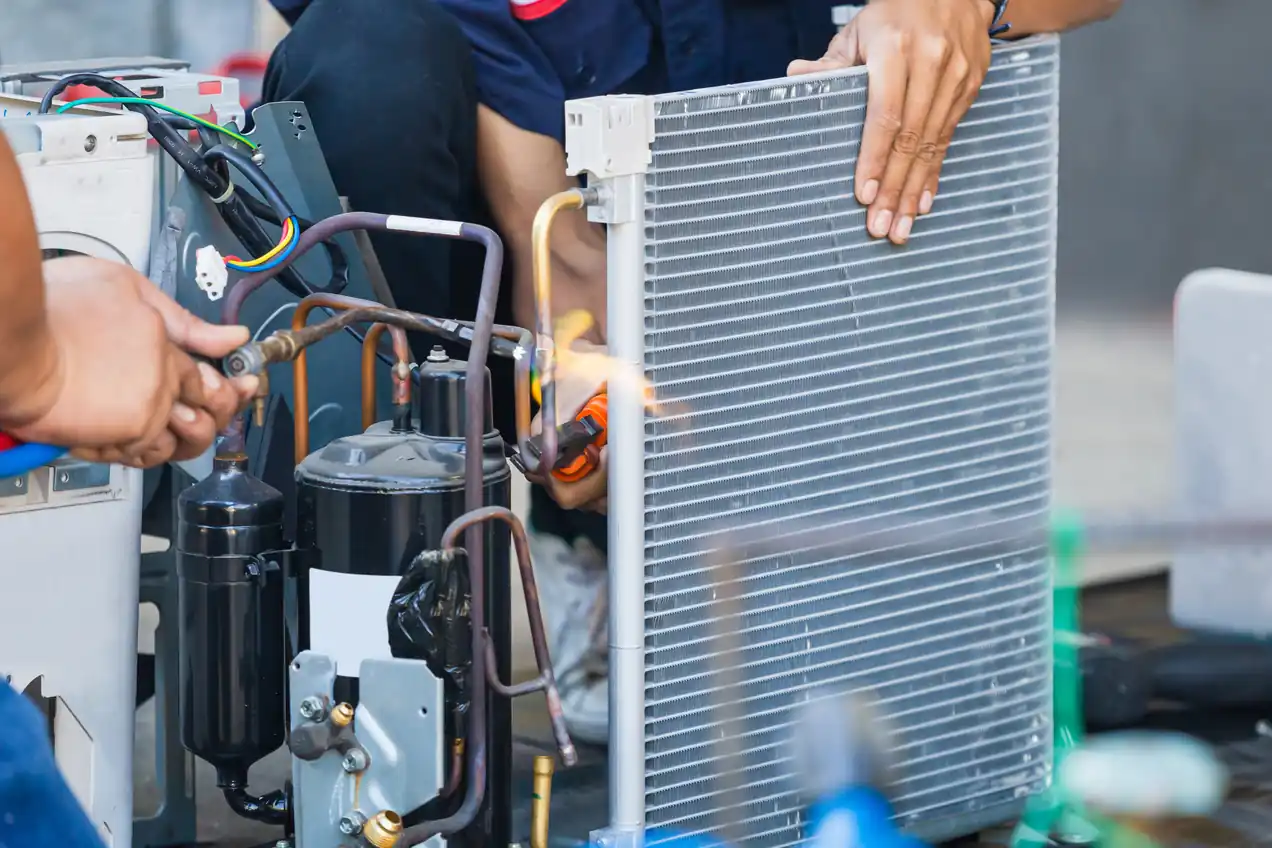
The condenser fan motor is responsible for powering the fan in your outdoor unit. When the fan turns, it pulls air through the unit and runs the air over your condenser coils. This cools the refrigerant gas in the coils so that the refrigerant can go back into your house for another cycle.
Signs Your Condenser Fan Motor May Not Be Working
If you notice the following, it may mean your condenser fan motor is not working.
- Unusual Sounds: There are loud buzzing or grinding noises coming from your outdoor unit.
- Short Cycling: The system short-cycles to prevent overheating due to the fan not working.
- Burning Smells: If you notice a burning odor, the motor’s electrical windings may be starting to overheat.
- No Spinning: When the motor isn’t running properly, you may notice the fan stops spinning. If it does spin at all, it may move slowly.
- Warm Air: A faulty motor means the fan isn’t moving properly. Because this prevents the refrigerant from cooling properly before continuing through the system, you may notice that your AC is blowing warm air through your vents.
- Tripped Breakers: If a malfunctioning motor is drawing extra current, it can cause the breaker to trip repeatedly.
Common Causes of Condenser Fan Motor Problems
If your outdoor AC unit fan stopped working because of a faulty fan motor, there could be a few different problems at fault. To avoid the same problem in the future, it’s important to understand why your condenser fan stopped working.
Age and Normal Wear
The average lifespan of an AC ranges between 10 and 20 years. As the unit reaches the end of its lifespan, it will develop more frequent issues.
Poor Maintenance
Routine maintenance is essential for extending the lifespan of your AC and helping it avoid unexpected HVAC failure. During an AC tune-up, the technician inspects for signs of a problem, cleans components, lubricates moving parts, and tests the system’s performance. By identifying problems before they escalate, the technician can help you avoid more expensive repairs in the future.
Debris Buildup
Grass clippings, leaves, and other debris can end up clogging your fan motor and other components in your outdoor unit and cause increased resistance. This is why it is so important to regularly clean around the outdoor AC unit.
Electrical Issues
Whenever there is a power surge, electrical spike, or wiring issue, it strains your fan motor. Eventually, this can lead to a premature breakdown.
Corrosion
Because your unit is outdoors, it will be exposed to rain, snow, and humidity. Over time, this can cause your motor components and electrical connections to become corroded.
Condenser Fan Motor Troubleshooting Steps Homeowners Can Try
If you’re experiencing problems, the right condenser fan motor troubleshooting can help. While more complex repairs and maintenance tasks should be left to the professionals, you can try the following tips on your own.
- Remove Debris: To do this safely, turn off the power at the circuit breaker. Then, remove any debris that is blocking the fan. At the same time, you can also inspect for signs of overheating, loose wires, or burning odors. If you notice these symptoms, call for help and do not try to repair them on your own.
- Test the Blade: While the fan is still off, use a stick to try nudging the blade. If the blade doesn’t move or is quite stiff, the motor bearings may be seized. Meanwhile, a fan that spins freely may indicate a failed capacitor or another electrical issue.
- Check the Breaker and Disconnect Box: Verify that the disconnect box is properly engaged. Then, check the breaker to see if it has tripped. You can reset the breaker once. If it immediately trips again, there’s an underlying problem that needs to be addressed by a professional.
When To Call an HVAC Professional
You should reach out to our licensed HVAC technicians if your basic air conditioner fan troubleshooting doesn’t work. Additionally, call a professional immediately in the following circumstances.
- There is a burning odor.
- You hear grinding noises.
- The breaker keeps tripping.
- You believe the wiring is damaged or corroded.
- Basic troubleshooting didn’t solve the problem.
Repair vs. Replace: What Makes the Most Sense?
If you encounter AC condenser fan problems, you’ll eventually need to decide whether to repair or replace the AC. One common HVAC rule of thumb is known as the $5,000 rule. Basically, if the repair cost multiplied by your unit’s age is over $5,000, then a replacement is the better choice. When the repair cost is less than $5,000, a condenser fan motor repair is likely the best course of action.
However, other factors also come into play. A relatively young AC with a minimal history of repairs will last years longer if it is repaired. In comparison, older units with frequent repairs and poor energy efficiency should likely be replaced.
How To Prevent Condenser Fan Motor Problems
Once you’ve resolved your AC condenser fan problems, there are a few things you can do to prevent them from recurring in the future.
- Maintenance: We recommend performing a springtime tune-up before the cooling season arrives to prevent costly repairs, unexpected breakdowns, and declines in energy efficiency.
- Outdoor Cleaning: Throughout the year, remove grass, debris, and any other items that are around the outdoor unit. This ensures proper airflow and helps you avoid unnecessary wear.
- Condenser Coil Cleaning: To keep your unit operating at its best, the condenser coils should be cleaned as part of your routine maintenance. For your safety, always turn the unit off at the breaker before attempting to clean the coils.
- Filter Changes: For proper airflow, you should replace your AC filter every 30 to 90 days.
Why Homeowners Trust Elkhorn Heating, Air Conditioning, Plumbing, & Electrical
Whether you’re looking for a condenser fan motor replacement or a basic tune-up, our team can help. Over the years, we’ve developed a reputation as Denver and Littleton’s leading source of HVAC support.
- Problem Solvers: Until your problem is solved, our work isn’t complete.
- Trusted Advisors: We provide honest expertise, so you can be confident about the quality of your results.
- Customers for Life: Elkhorn is committed to building long-lasting relationships and making each client a customer for life.
- Local Experts: Our experts are based in the Denver and Littleton area, so we understand what local residents need.
- Same-Day Services: When your AC breaks down, you can’t afford to sweat it out. We offer same-day service for all of your HVAC repair needs.
For professional condenser fan motor troubleshooting and repairs, reach out to our HVAC technicians today.
Frequently Asked Questions About Condenser Fan Motors
Why is my AC condenser fan not spinning?
If your AC fan is not spinning, it may be due to debris blocking the fan’s movement, a faulty contactor, a failed capacitor, or a seized fan motor. Because many potential problems can cause this symptom, it’s essential to reach out to an HVAC expert for professional diagnostics.
Can a bad capacitor stop the fan motor from working?
Absolutely. The capacitor is responsible for providing a jolt of energy to get the fan motor moving. If the capacitor doesn’t work, the fan motor won’t turn on.
Is it dangerous to run the AC if the fan isn’t spinning?
Yes, it is. If your outdoor AC fan is not working, you should immediately turn your entire system off and call for HVAC repairs. Otherwise, you can cause compressor damage, overheating, and more costly repairs.
How much does a condenser fan motor repair cost?
It will depend on the brand, whether other repairs are needed, and any existing warranties. On average, a condenser fan motor that is still under warranty will cost between $100 and $300 to replace. Without a warranty, this repair generally costs between $200 and $700.
Should I repair or replace my AC system?
It depends on the cost of the HVAC repairs, the age of the unit, the AC’s current performance level, and the presence of a warranty. Once your AC is over 10 years old or requires more frequent repairs, getting an AC replacement generally makes the most sense.
What causes condenser fan motors to fail?
Anything that strains the condenser fan motor can eventually cause it to fail. For example, environmental strain, electrical malfunctions, poor airflow, and normal wear can eventually cause your motor to stop working.